
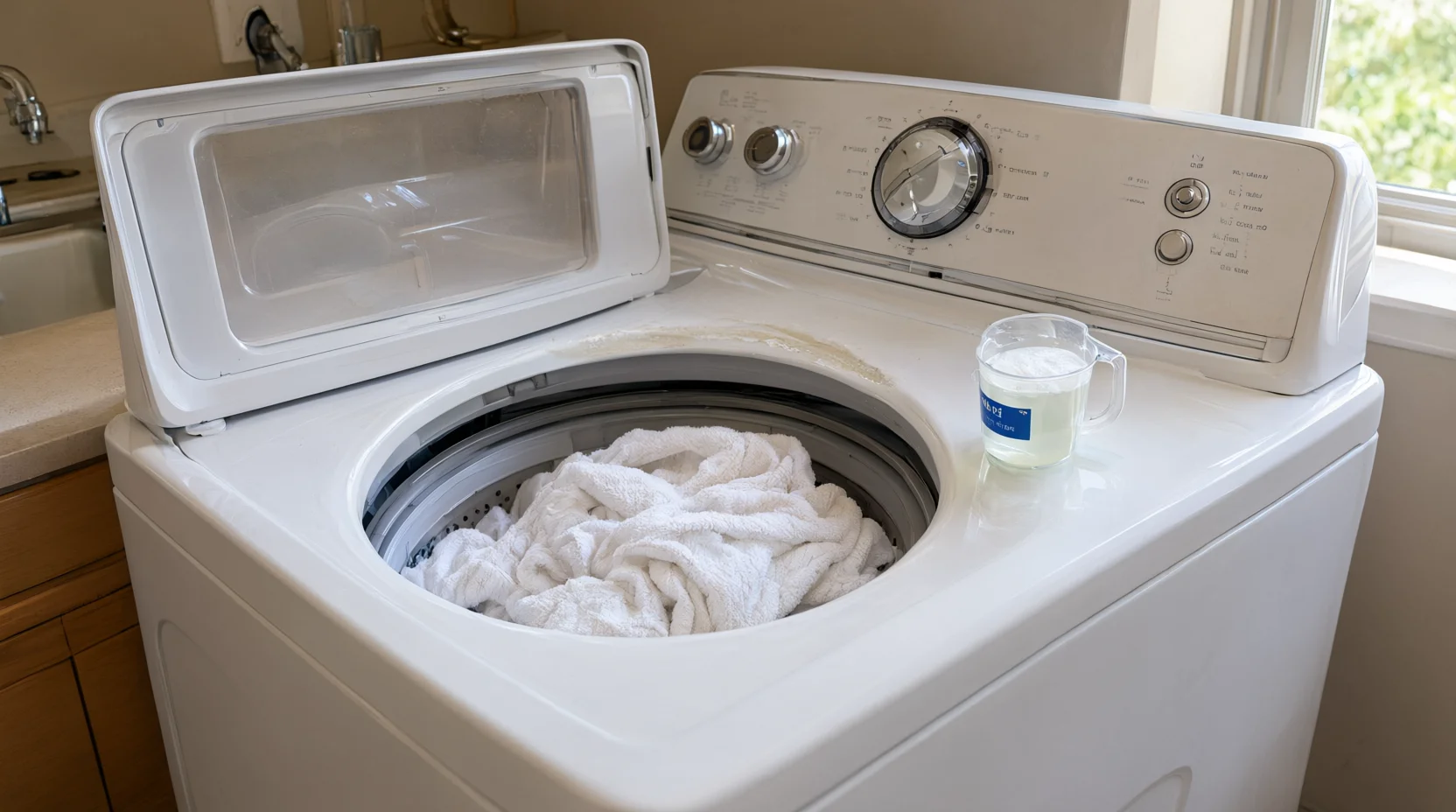
A soapy or stiff feel after a top-load wash usually means detergent was not fully rinsed away. The most common trigger is using more detergent than the water volume and cycle can clear, but low water levels, cold water, hard water and a clogged drain system can each produce the same result. The right fix depends on which factor dominates in your machine, so the sections below help you identify the cause before changing anything.
What "soapy" residue actually is
Detergent residue is a film of surfactant and detergent builders left on fabric when the rinse water cannot carry it away. Surfactants are the ingredients that lift soil from fibers; detergent builders help the formula work against water hardness. When either remains on the cloth, it can trap lint and redeposited dirt, which is why affected laundry often feels slick, stiff or slightly tacky rather than simply scented.
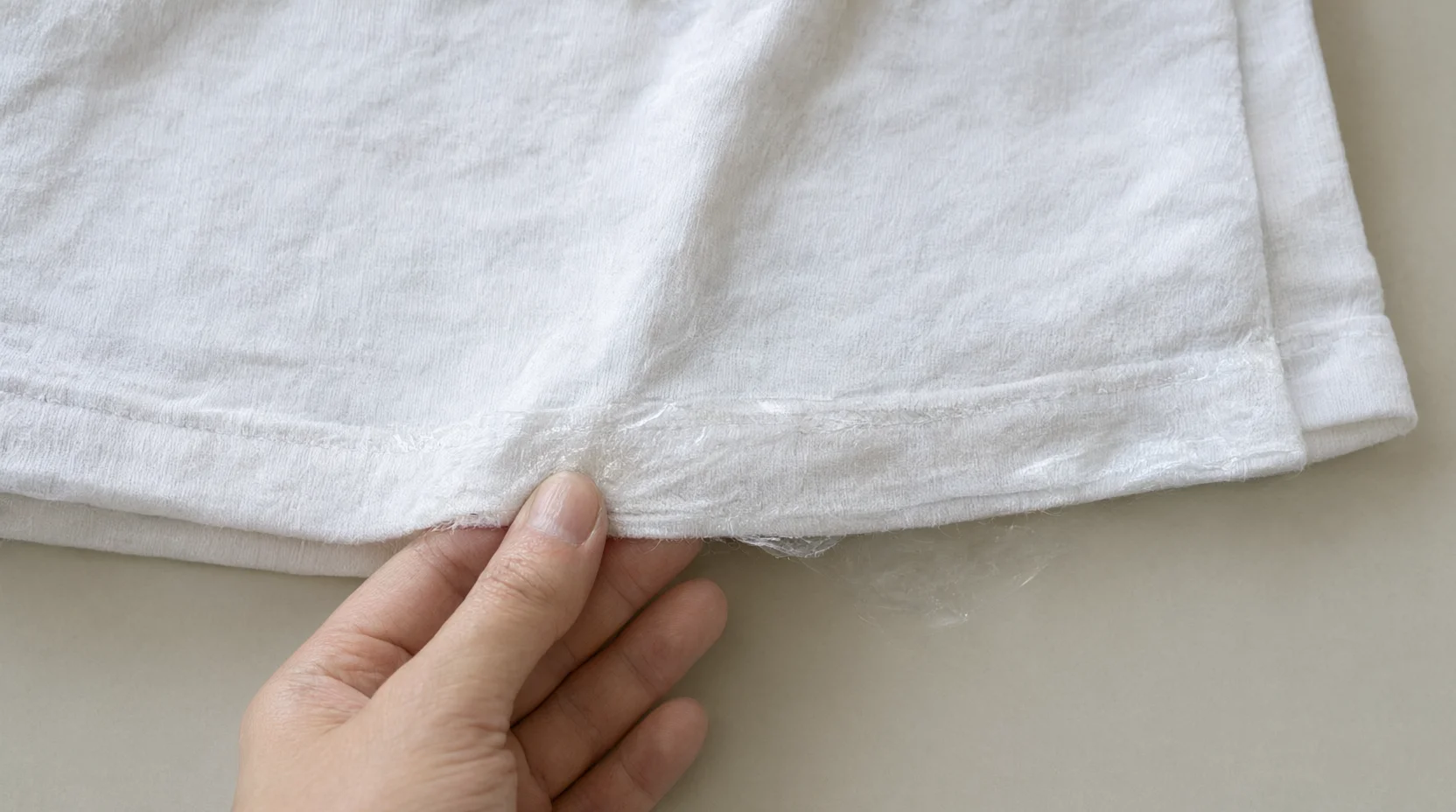
Not every unpleasant feel comes from detergent. Fabric softener leaves a waxy coating that can feel similar but behaves differently, and hard water deposits leave a rougher, mineral-like texture. The distinction matters because the remedies differ: detergent film responds to extra rinsing, softener buildup often needs a different approach, and mineral deposits point to water treatment rather than dosing.
Why top-load washers are prone to leaving residue
Top-load washers create conditions where residue is more likely. Standard models fill to a set water level, and high-efficiency (HE) top-loaders deliberately use less water per load. Less water means less dilution for the detergent and less mechanical flushing of suds out of the fabric.
In agitator models, clothes are pulled toward the center of the drum, so suds can get trapped in folds and hems where rinse water reaches less effectively. Overloading makes this worse, because water and detergent cannot circulate freely.
Drainage matters too. If the drain pump filter collects lint and detergent buildup, water drains more slowly and suds linger in the drum instead of being flushed away. A machine that drains poorly can leave residue even when the dose was correct.
Too much detergent vs. not enough rinse
Overdosing is the most common cause of excess suds in a top-load washer. More detergent creates more foam than a single rinse can clear, and the leftover foam dries onto fabric as residue. Detergent manufacturers and appliance guidance consistently point to dose and detergent type as the first things to check.
Detergent type matters as much as quantity. Regular detergent used in an HE washer can produce far more suds than the machine is designed to handle. Excess suds in an HE machine can cushion the laundry, reduce the mechanical action that removes soil, and leave residue that is hard to rinse out, as Tide's guidance on excess suds explains. As a general consideration, matching the detergent to the washer type keeps sudsing within the range the rinse cycle was designed for.
Even a correct dose fails if the selected cycle uses too little water or skips a second rinse. Large, absorbent loads such as towels hold more detergent-laden water and need more rinse volume to clear it. Hard water adds another layer: it can require more detergent to clean effectively, but the extra detergent builders then need more rinse water to be carried away.
How to remove existing detergent residue from clothes
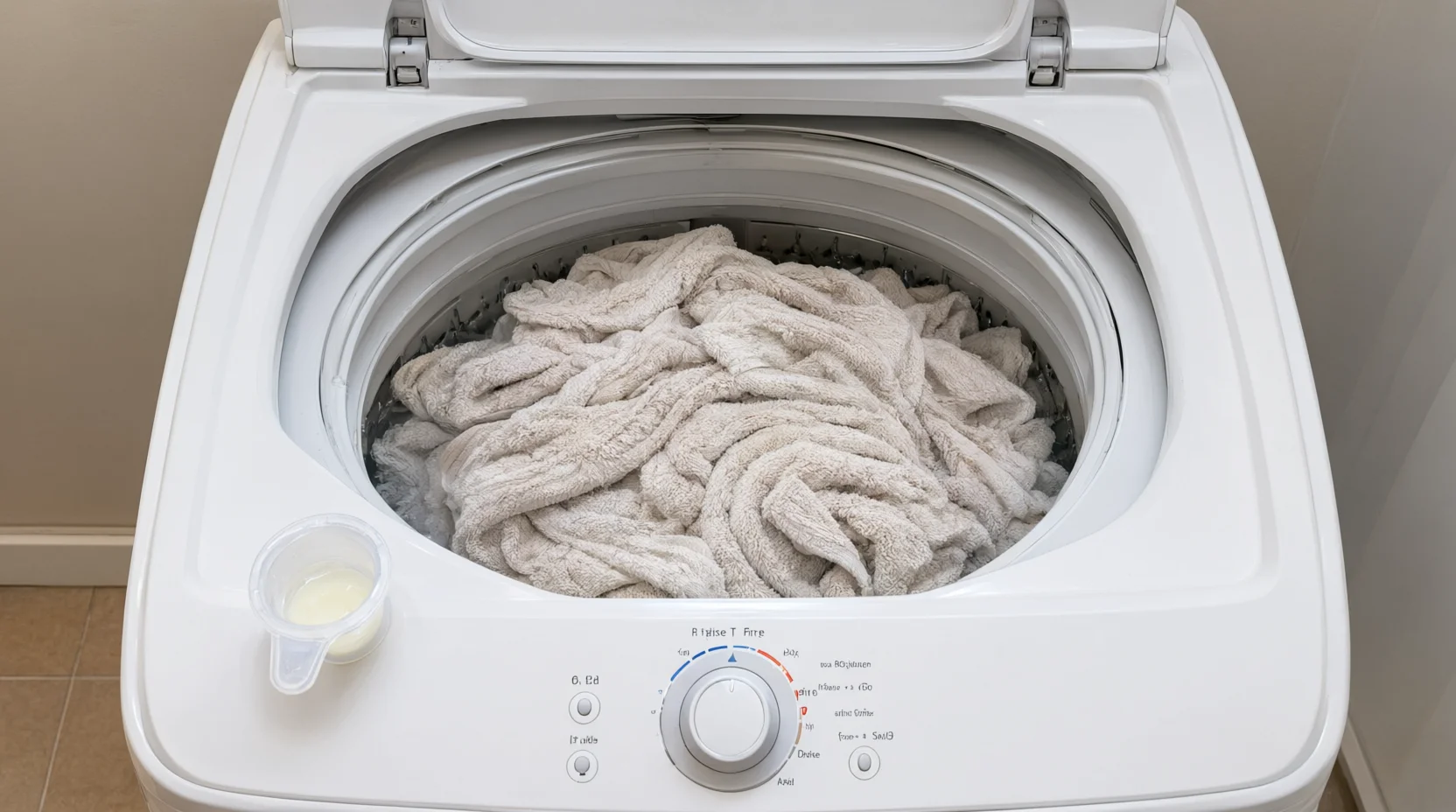
For laundry that already feels soapy, rewash the load with no detergent at all, using the warmest water the care labels allow and an extra rinse cycle. Water alone is often enough to release trapped surfactant once the mechanical action and rinse volume are adequate.
For heavier buildup, soak the garments in clean water before rewashing. A water-only soak loosens the film so the rinse can carry it away more completely. Check care labels before raising the water temperature, since heat can set some stains or damage certain fabrics.
Be cautious with home remedies. Adding vinegar or baking soda together with detergent in the same cycle can interact unpredictably with the formula, and neither is a guaranteed fix for every residue type on every fabric. If you want to try them, use them in a separate step and follow the product and machine instructions.
Fixing excess suds and improving rinse performance
Prevention comes down to matching dose, water and drainage to the load. The following adjustments address the most common causes of recurring residue.
- Measure detergent precisely. Use the cap or measuring device and follow the label for load size and water hardness rather than filling by habit.
- Choose more rinse water. Select an extra rinse or deep fill option when available, especially for large, bulky or absorbent loads.
- Use warmer water where fabrics allow. Warm or hot water dissolves detergent and carries residue away more effectively than cold water.
- Clean the drain pump filter. Follow the washer manual for location and frequency; a clear filter restores proper drainage.
- Run a maintenance cycle. A monthly washer cleaning cycle helps clear accumulated film from the drum and internal parts.
If suds persist after these steps, check whether the detergent is matched to your machine type. Using an HE-labeled detergent in an HE top-loader, and a standard detergent in a standard model, keeps sudsing within the range the rinse cycle was designed to handle.
When to reconsider your detergent form
Product format affects how easily detergent dissolves and rinses away. Powdered detergent can leave a residue that makes clothes stiff, and using the right water temperature helps the detergent dissolve, as Whirlpool notes on detergent residue and stiff clothes explains. Liquid detergent is easy to over-pour without careful measuring. Pre-measured formats such as laundry pods reduce dose variation, but they still need enough water and agitation to dissolve and rinse completely. Laundry sheets dissolve in water but require adequate water contact and movement to break down fully.
If you are troubleshooting a specific format, these guides may help: why laundry pods leave residue and how to fix it, how to read detergent dosing instructions for HE and standard washers, and liquid vs powder detergent in hard water. For loads where fragrance products are also in use, scent bead residue troubleshooting covers a separate but sometimes confused cause of a coated feel.
What to check before your next load
Start with the simplest variable: measure the detergent to the label's recommendation for your load size and water hardness, and confirm the product matches your washer type. Then add rinse water through an extra rinse or deep fill setting, and clean the drain pump filter if you have not done so recently. If the soapy feel returns after those changes, the cause is more likely water temperature, water hardness or a drainage problem than the detergent itself. Working through the causes in that order avoids unnecessary product switches and usually resolves the residue at its source.