
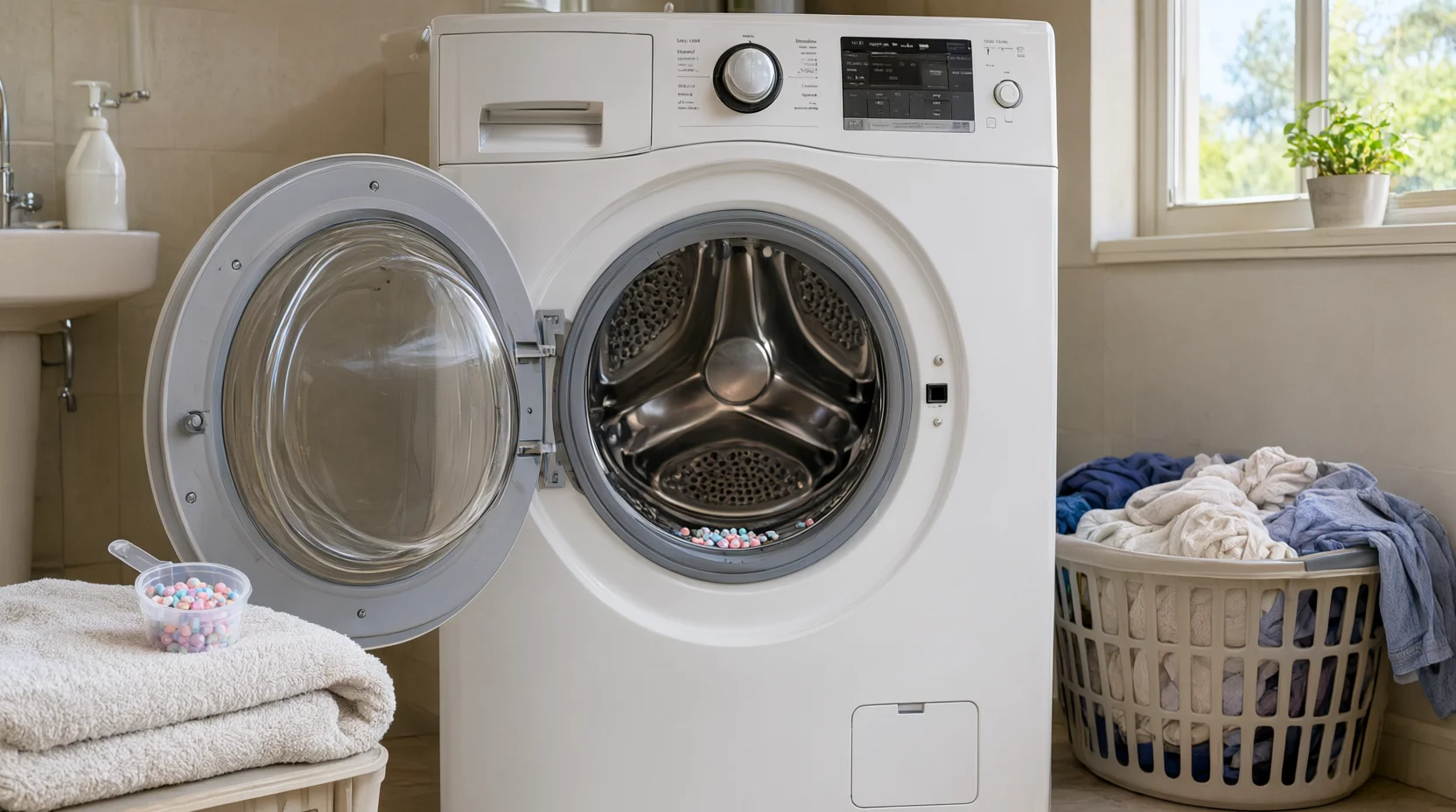
Residue and weak fragrance from laundry scent beads usually come down to four correctable factors: putting the beads in the dispenser drawer instead of the drum, using too many, washing in water too cold for the beads to dissolve fully, or overloading the machine so water cannot circulate. No single adjustment fixes every case, because the cause differs. Fix the specific cause first, then adjust dose and wash conditions as needed.
How Scent Beads Work and Where Problems Start
Laundry scent beads are fragrance boosters. They dissolve in the wash water and deposit perfume microcapsules onto fabric; those capsules later release scent as the fabric moves and rubs against itself. They are not a detergent and not a fabric softener. They contain no surfactants to lift stains and no softening agents to coat fibers, so they are an optional add-on to a normal wash routine, not a replacement for either product.
That narrow job explains both common complaints. Visible residue means the beads did not dissolve completely, leaving polymer or carrier material on fabric or in the drum. Weak scent means too few microcapsules bonded to the fabric, or the conditions during the wash prevented them from depositing evenly. Both are usage problems before they are product problems.
Four Causes of Residue and Weak Fragrance
The four causes below produce similar symptoms but need different corrections. Check them in order, starting with placement, because it is the most common and the easiest to change.
Wrong placement
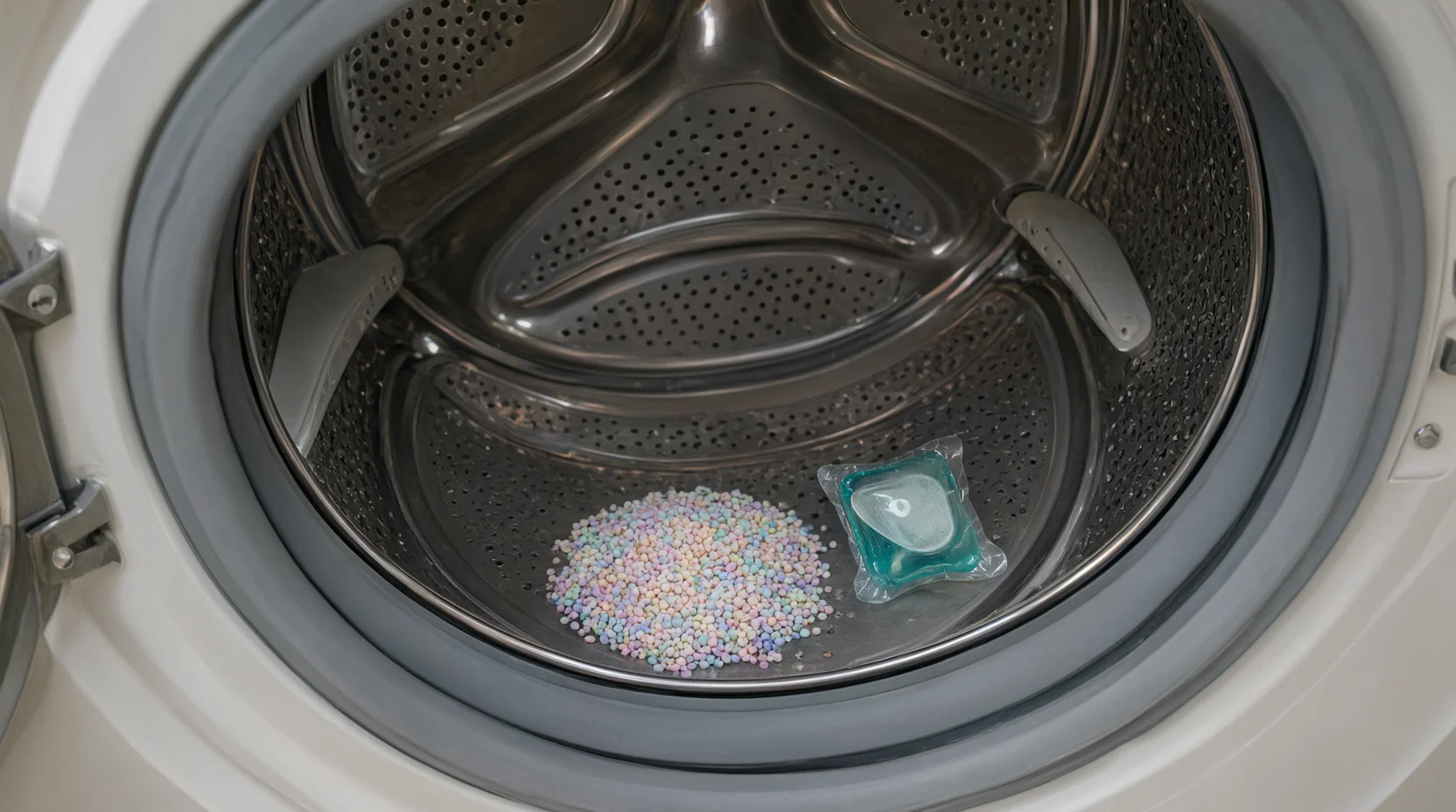
Scent beads belong in the empty washer drum before the clothes go in. Added there, they meet water immediately and dissolve as the drum fills and tumbles. In a dispenser drawer, they sit in a small compartment where water contact is delayed and where they can mix with concentrated detergent. That combination can trap partially dissolved beads and flush them onto fabric late in the cycle. Pour the measured beads into the empty drum, then add detergent, then load the clothes.
Overdosing
Every wash cycle has a limited volume of water available to dissolve and disperse the beads. Beyond that point, extra product cannot dissolve and shows up as specks, most visibly on dark fabrics. High-efficiency (HE) machines use less water per cycle, so the margin is smaller. Start with half a cap for a regular load and increase only for larger loads or a stronger scent preference. More beads do not guarantee more fragrance if the water cannot carry them.
Cold water cycles
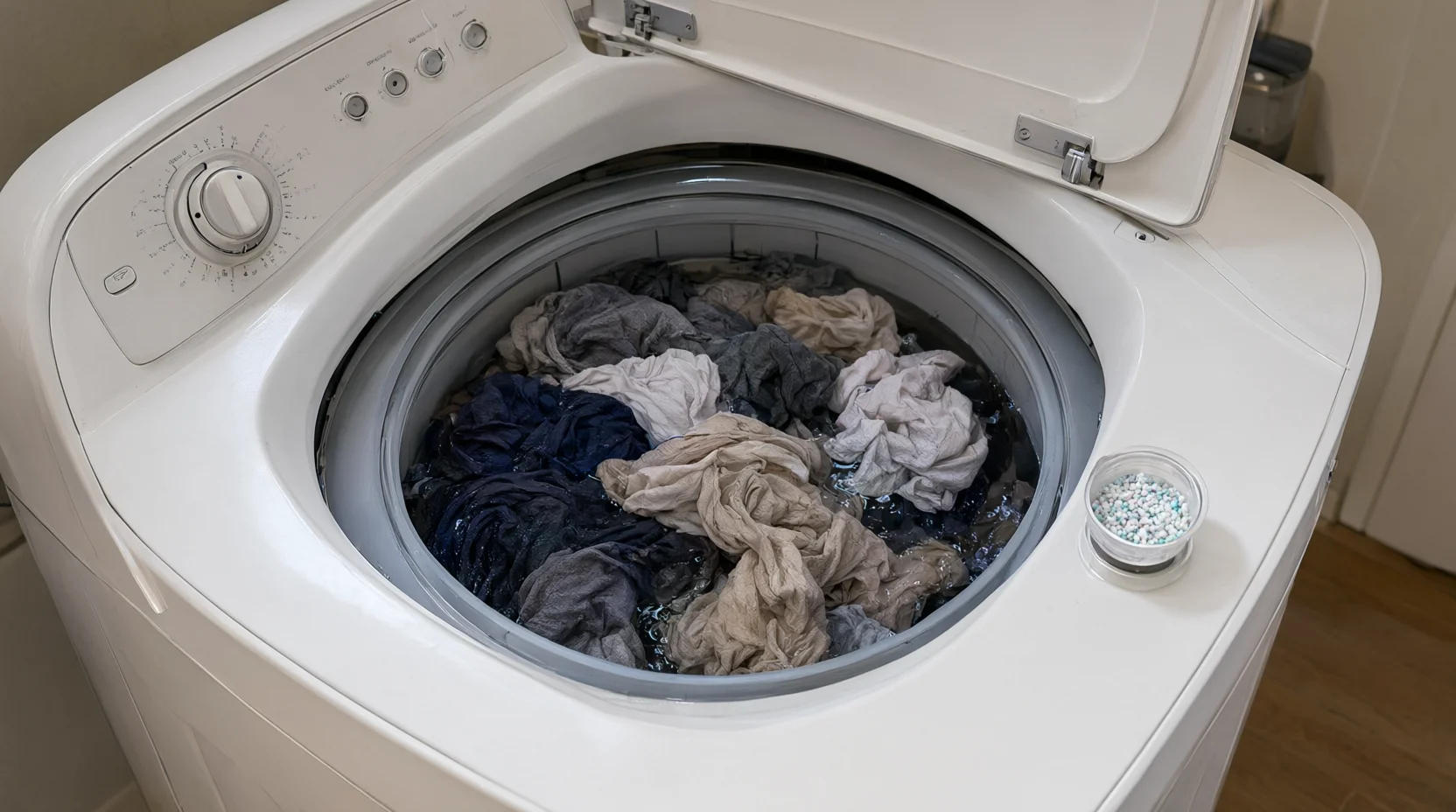
Some bead polymers dissolve more slowly in cold water. When dissolution is incomplete, two things happen at once: undissolved material can remain on fabric, and fewer microcapsules are released to bond with the fibers, so the scent is weaker than expected. Check the product label for cold-water guidance. If residue persists on a cold cycle, either reduce the dose or move that load to a warm cycle.
Overloaded washer
A packed drum restricts the water movement that distributes and dissolves the beads. When clothes cannot tumble freely, beads can clump against fabric instead of dispersing. Load the machine to the manufacturer's guidelines and leave space for the load to move. This also helps detergent and rinse water reach the whole load.
Step-by-Step Fixes for Each Problem
Match the fix to the cause you identified above. The steps below follow the order of a normal wash, so you can apply them without changing your routine.
- Measure with the product cap. Start with half a cap for a regular load. Increase the amount only for larger loads or when you want a stronger scent. Do not pour freely.
- Add the beads to the empty drum first. Pour them in before the detergent and before the clothes. Never use the dispenser drawer.
- Check cold-water compatibility on the label. If the label does not confirm cold-water use, or if residue appears after a cold wash, switch that load to warm or reduce the dose.
- Load to the machine's guidelines. Leave enough space for tumbling and water movement. An overloaded drum is a common hidden cause of both residue and weak scent.
- Clear existing residue. Wipe the drum with a damp cloth after the cycle. If buildup is visible, run an empty hot rinse before the next load.
If you also use laundry pods, the same placement logic applies to both products, but each has its own dissolution behavior. A separate guide on why laundry pods leave residue and how to fix it covers the pod-specific causes, including film behavior in cold water.
Scent Beads vs. Fabric Softener: What Each Actually Does
Scent beads and fabric softener complement each other rather than serving the same purpose. Scent beads go into the drum at the start of the wash and exist only to add fragrance. Fabric softener goes into the softener compartment, is released during the rinse, and coats fibers so clothes feel softer and carry less static. Most softeners also carry a light scent, but fragrance is not their main job.
| Dimension | Laundry scent beads | Fabric softener |
|---|---|---|
| Primary purpose | Add fragrance | Soften fabrics and reduce static |
| When to add | At the start of the wash, in the empty drum | During the rinse cycle, through the softener compartment |
| Cleaning action | None | None |
| Fragrance strength | Designed for stronger, longer-lasting fragrance | Usually lighter |
| Can be used together | Yes, with correct placement for each | Yes, with correct placement for each |
Because the two products work at different stages, you can use both as long as each is placed correctly. If you want softness and a strong scent, put fabric softener in its compartment and scent beads in the drum. Expecting one product to do the other's job leads to overdosing, which is itself a cause of residue.
When to Skip Scent Beads Entirely
Some loads should not receive fragrance boosters no matter how carefully you use them. Performance fabrics with moisture-wicking finishes may be affected by residue or by coatings that interfere with the finish. People with fragrance sensitivity, or items intended for sensitive skin, may need to avoid added perfume altogether. Certain technical textiles and reusable diapers are also poor candidates, because any residue is undesirable. In these cases, follow the garment care label and the product label; if either advises against added fragrance, leave the beads out.
For readers who want to review the full usage routine, including dosing and pairing with laundry pods, a dedicated guide on how to use laundry scent beads covers placement and pairing in more detail.
Key Takeaways
Residue and faded scent from laundry scent beads are usually caused by placing them in the dispenser drawer, overdosing, cold water that prevents them from dissolving fully, or an overloaded drum. Fix the specific cause: add the beads to the empty drum, start with half a cap, check the label for cold-water guidance, and load the machine so water can circulate. Laundry scent beads add fragrance only; they do not clean or soften fabrics, and they work alongside laundry detergent and fabric softener rather than replacing them. When a garment care label or a product label advises against added fragrance, skip the beads for that load.