
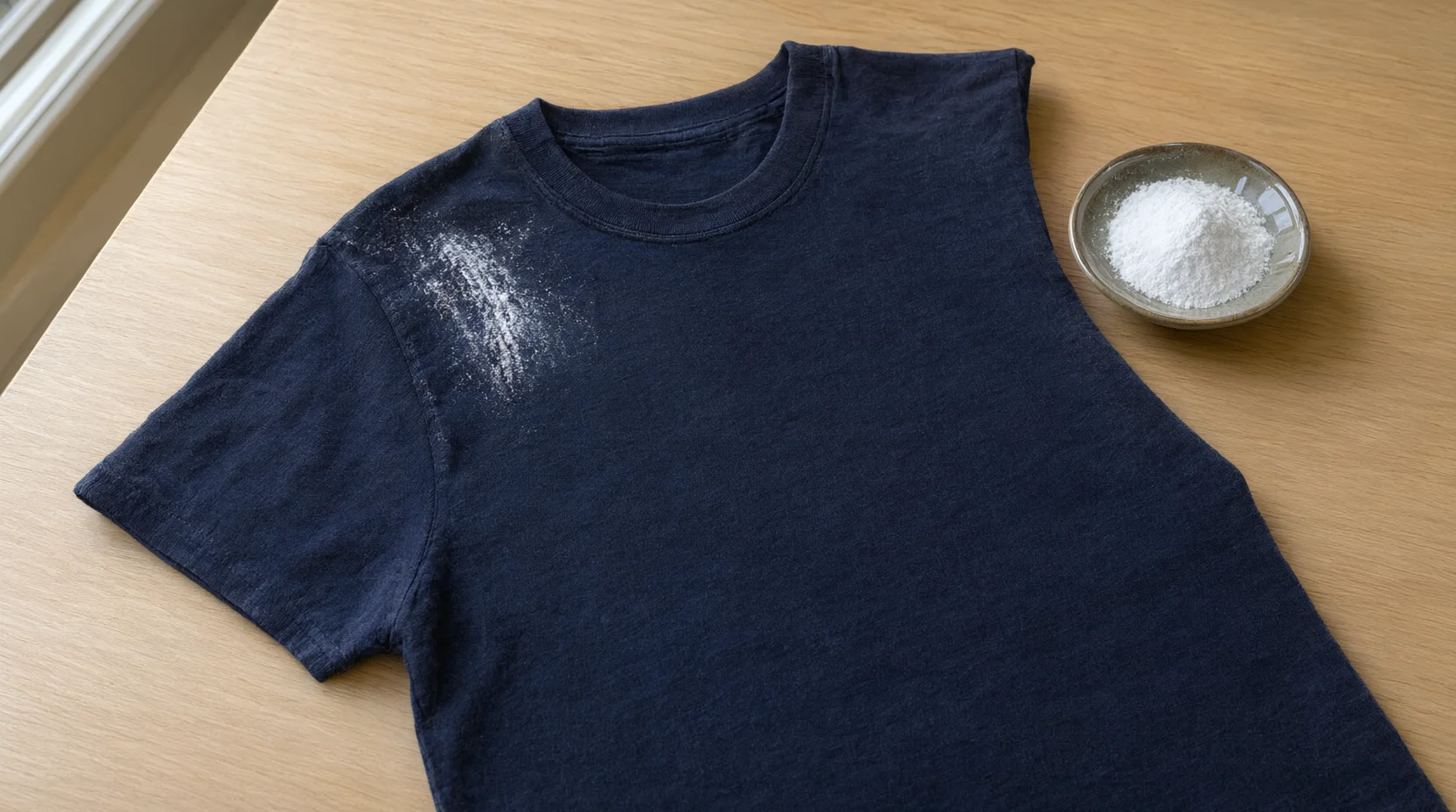
Washing soda leaves white marks on dark clothes when sodium carbonate does not fully dissolve before it touches fabric, when cold water limits how much can dissolve, or when it reacts with hard-water minerals to form insoluble particles that settle on the cloth. The residue is more visible on dark fabric because of contrast, not because dark cloth attracts more of it. To fix existing marks, re-wash without adding more washing soda and use a full-water-level rinse; to prevent them, pre-dissolve the powder in warm water, keep loads loose, and add an extra rinse.
What the white residue actually is
Washing soda is sodium carbonate, a detergent builder rather than a stand-alone cleaner. Its carbonate ions bind calcium and magnesium in hard water, forming calcium carbonate and magnesium carbonate—compounds that are barely soluble and drop out of solution as fine particles. That reaction protects the detergent from being wasted on water hardness, but it also explains one route to visible white marks on clothing.
Three distinct mechanisms can produce the same chalky appearance on dark garments. First, undissolved sodium carbonate crystals can cling to fabric if the powder is added dry or the water is too cold to dissolve it fully. Second, the precipitated mineral carbonates from hard water can deposit on cloth as a white or gray film. Third, repeated overdosing or poor rinsing can leave an accumulated alkaline film that builds up over several washes.
On white or light laundry, the same deposit may be invisible. Dark fabric simply shows the contrast between the residue and the cloth, which is why the problem seems to target black and navy garments even when the underlying cause is a general wash-condition issue.
Why washing soda struggles in some wash conditions
Sodium carbonate dissolves more slowly and less completely in cold water than in warm or hot water. Heat provides the energy needed to break the ionic bonds in the powder so that the sodium and carbonate ions disperse. In a cold wash, undissolved granules can remain in the drum and come into direct contact with fabric, especially when the powder is sprinkled onto clothes rather than added through a dispenser.
Mechanical factors matter as much as temperature. An overloaded drum restricts water circulation, trapping concentrated alkaline solution in folds and seams where rinsing is weakest. Adding dry washing soda directly onto clothes or into a full drum puts undissolved granules in direct contact with fabric before they have a chance to dissolve.
Hard water compounds the problem. The carbonate ions are doing their intended job—precipitating calcium and magnesium—but the resulting insoluble particles have to go somewhere. If they are not rinsed away, they settle on the cloth. This is a different mechanism from plain undissolved powder, but the visible result on dark clothes is similar.
How to remove washing soda residue from clothes
If the marks are already there, the goal is to dissolve and rinse away the deposit without adding more alkaline material or creating new salt residues. Work through these steps in order.
- Re-wash affected items in warm water with no added detergent or washing soda. Use a full-water-level cycle so the drum has enough water to dilute and carry away the residue.
- For persistent marks, soak in clean warm water and agitate gently before rinsing thoroughly. Check seams, hems and folded areas where residue concentrates.
- Inspect before drying. Heat from a dryer can set deposits into the fabric, making them harder to remove later.
- Avoid adding vinegar or acidic neutralizers while garments with alkaline residue are still in the machine. The acid-base reaction can create salt deposits of its own; if you use an acidic rinse aid, do it as a separate step after the residue has been rinsed away.
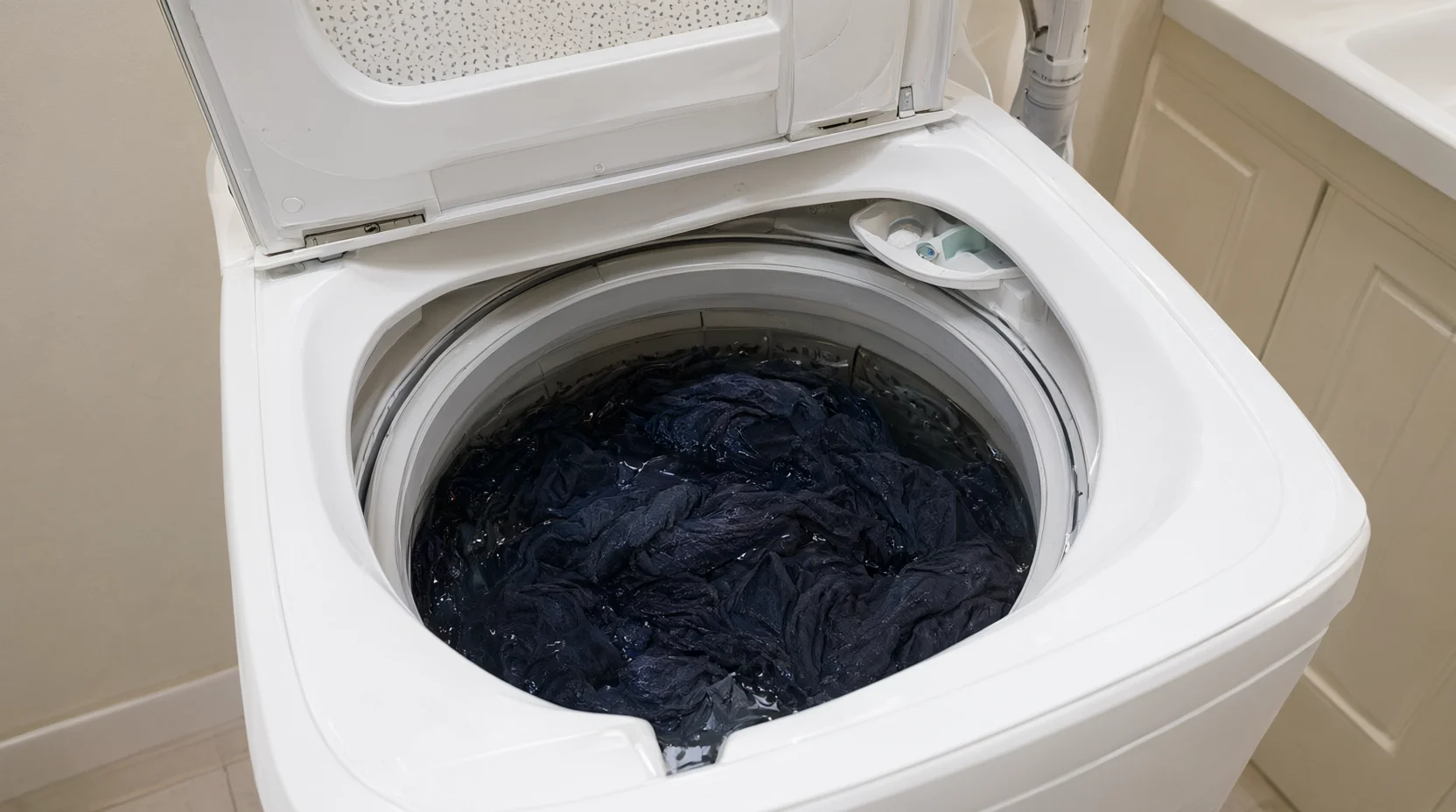
If a mark survives two re-wash cycles, the deposit may be mineral scale rather than plain sodium carbonate. In that case, a dedicated laundry descaling product used according to its label is more appropriate than repeated washing soda or acid additions.
Preventing residue when you use washing soda
Most residue problems can be prevented by changing how the powder enters the wash and how much water moves through the load. The following habits address the three mechanisms described above.
- Pre-dissolve washing soda in warm water before adding it to the drum or detergent drawer. Stir until no granules remain visible, then pour the solution into the dispenser or directly into the drum water.
- Use the warmest water safe for the fabric care label. Warmer water improves dissolution and gives the carbonate more opportunity to react before contacting cloth.
- Run an extra rinse cycle when using washing soda, especially in cold water, with large loads, or in hard-water areas.
- Reduce the amount of washing soda if your water is moderately hard. More detergent builder is not always better; excess carbonate that has finished binding minerals becomes another source of deposit.
- Do not overload the washer. Leave enough room for clothes to tumble or circulate so the water can dissolve and rinse away the powder.
- When combining it with powder detergent, add both through the dispenser or pre-dissolve them together rather than sprinkling either product onto dry clothes.
For a broader look at how detergent builder chemistry and water hardness interact with different detergent formats, see liquid vs powder laundry detergent in hard water. If the residue appears alongside other powder-detergent problems, the troubleshooting steps in why powder laundry detergent leaves white residue on dark clothes cover overlapping causes.
When washing soda may not be the right choice
Some wash conditions make residue hard to avoid even with careful technique. If you must wash dark clothes in cold water and your water is hard, a liquid detergent with built-in detergent builders may leave fewer visible deposits because the builder is already dissolved in the formula. This is a formulation difference, not a guarantee; the actual result depends on the product and the water.
Pre-dosed formats such as laundry pods or laundry sheets reduce measuring errors, but they have their own dissolution requirements. Laundry pods rely on PVA water-soluble film that must contact enough water to dissolve, and laundry sheets need adequate water and agitation. Neither format eliminates residue under every condition. If residue problems persist across multiple products, consider addressing water hardness at the source with a water-softening approach rather than adding more builder to each load.
The practical takeaway: treat washing soda as a builder that needs warm water, loose loads and thorough rinsing. Pre-dissolve it, do not sprinkle it dry onto dark clothes, and check garments before drying so any residue can be re-rinsed while it is still removable.