
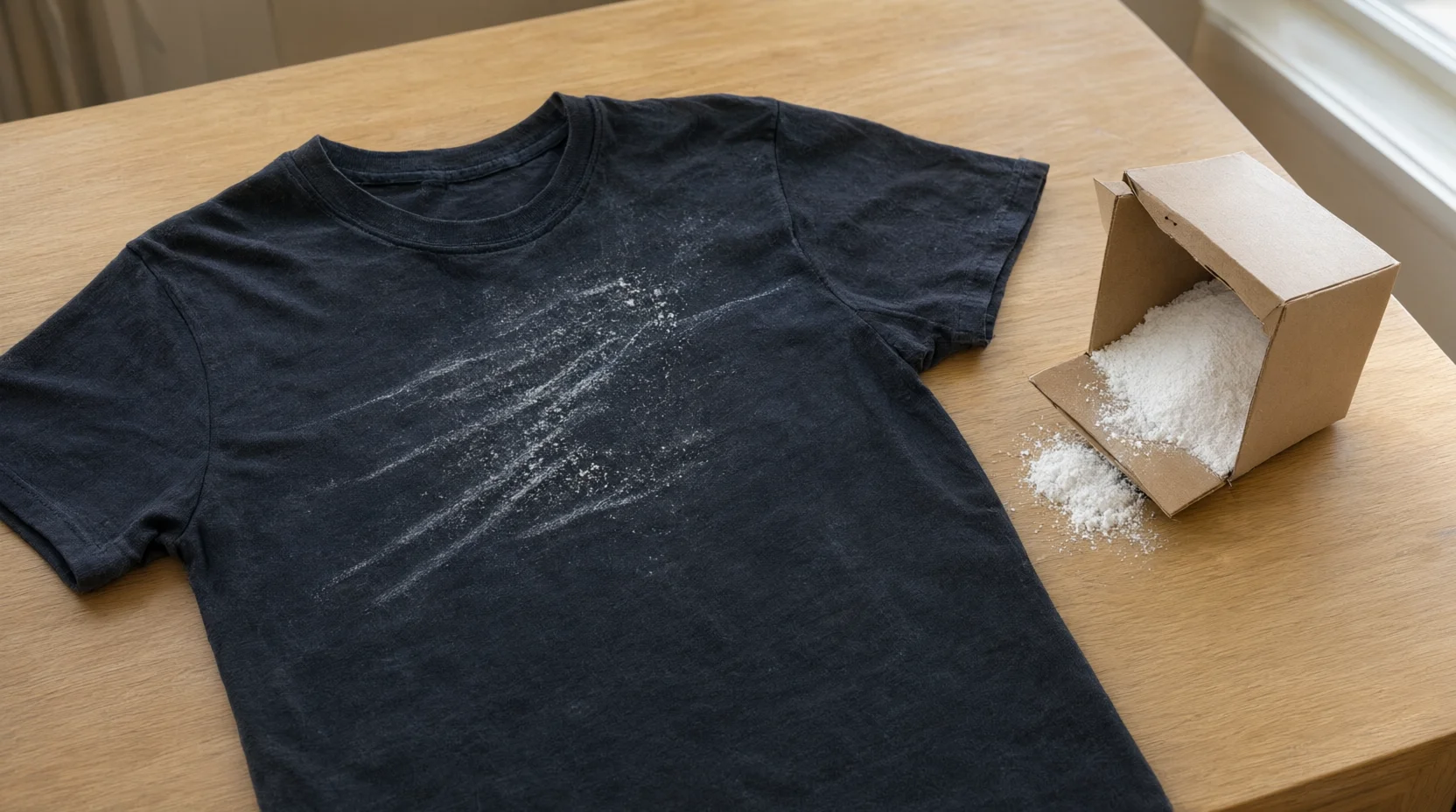
White residue on dark clothes after washing with powder detergent is usually undissolved or redeposited detergent, not a permanent stain. It happens most often when powder fails to dissolve fully before or during the rinse. The main conditions that cause this are wash water below 60°F (15.6°C), hard water minerals that react with detergent builders, using more detergent than the water can keep suspended, and overloading the washer so water cannot circulate freely. You can usually remove the marks by re-washing without extra detergent, soaking the garment in warm water and rubbing the fabric against itself, or switching to a liquid or pre-dosed format if your water conditions consistently work against powder. The right fix depends on your water temperature, water hardness, and how you load the machine.
What the white residue actually is
The chalky or powdery marks you see on dark clothing are typically detergent solids that never fully dissolved, or that dissolved and then settled back onto the fabric during the rinse. They are not a true dye stain, which is why they often flake or fade when you rub the dry fabric together. On light or white clothes, the same residue may be present but invisible because there is no color contrast. Dark fabrics simply make white particles easy to see.
In hard water, the residue can also include insoluble mineral soaps. Detergent builders—formulation ingredients that improve cleaning by controlling water hardness—react with calcium and magnesium in the water to form precipitates. These precipitates can deposit on fabric as a white or gray film. That is a different mechanism from plain undissolved powder, but the visible result on dark clothes is similar.
Why powder detergent fails to dissolve fully
Powder detergent is a mixture of surfactants, builders, and other solids. It needs enough water, enough time, and enough movement to dissolve and then stay dissolved through the rinse. When any of those conditions are missing, particles can remain.
Cold water slows dissolution
Laundry detergents are generally formulated to clean well at temperatures above 60°F (15.6°C). Water below that temperature does not dissolve detergent well, and powdered detergents are especially affected because they start as dry solids. If your washer fills with cold water in winter or you routinely select a cold cycle, powder may not fully dissolve before the wash ends. Liquid detergent dissolves more readily in cold water because water is already its main base.
Hard water minerals interfere
Hard water contains dissolved calcium, magnesium, and other minerals. When these minerals meet detergent builders, they can form insoluble compounds that no longer clean and may deposit on fabric. This is why hard water and powdered detergent together are a common cause of white marks on dark clothes. The effect depends on your local water hardness and the specific builder system in the powder.
Overdosing exceeds the water's capacity
Using more detergent than recommended does not make clothes cleaner. It adds more solids than the water can keep suspended, so some of the excess can remain on fabric after the rinse. This is true for both powder and liquid, but powder is less forgiving because it must dissolve first. Follow the dosing instructions on the product label for your load size and soil level.
Overloading restricts water circulation
A washer that is packed too full leaves less water and less mechanical action available to dissolve powder and carry it away. Clothes need room to move so water can flow through the load. For a top-loading washer, a load that is about three-quarters full is often a practical target, but check your machine manual for specific guidance. High-efficiency washers use less water by design, so they can be more sensitive to powder that does not dissolve quickly.

How to remove dried detergent residue from dark clothes
If the marks are already on the garment, you can often remove them without special products. The goal is to redissolve the residue and rinse it away, rather than scrub it deeper into the fabric.
- Rub the dry fabric against itself to flake off loose powder before you rewet it. This removes surface particles and keeps them from spreading.
- Soak the garment in warm water, following the care label for the maximum safe temperature. While it soaks, rub the affected area against itself periodically to help loosen the residue. About an hour is often enough, but stubborn marks may need longer.
- Rewash in warm water with no added detergent. Make sure the load is small enough that the garment can move freely. The clean water and agitation help carry away the loosened residue.
- If marks remain, repeat the soak or run an extra rinse cycle. Avoid aggressive scrubbing on delicate fabrics, which can damage fibers or create pilling.
These steps are general guidance for detergent residue. Always check the garment care label first, especially for wool, silk, or other delicate materials that may not tolerate warm water or prolonged soaking.
Preventing white streaks on future dark loads
Most residue problems can be prevented by adjusting a few factors you control. The best combination depends on your washer, your water, and the loads you typically run.
- Use warm or hot water when the fabric care label permits. Powder dissolves more reliably in warmer water. If you must wash cold, consider a liquid or pre-dosed format instead.
- Reduce the detergent dose. Use the minimum recommended for your load size and soil level. More detergent does not mean more cleaning power, and excess solids are a common cause of residue.
- Improve powder dispersion. Add powder to the drum before the clothes, or use the manufacturer's designated dispenser. This gives the powder a chance to contact water before it can cling to fabric.
- Leave room for movement. Do not overload the washer. Clothes should tumble or circulate freely so water can dissolve and rinse away the detergent.
- Match the format to your conditions. If you consistently wash in cold water or have very hard water, liquid detergent or a pre-dosed format may leave less residue than powder.
When powder vs. liquid makes a difference
The choice between powder and liquid is not about one being universally better. It depends on how you wash and what your water is like. The table below summarizes the main practical differences that affect residue on dark fabrics.
| Factor | Powder detergent | Liquid detergent | Pre-dosed formats (pods, sheets) |
|---|---|---|---|
| Dissolution in cold water | May not dissolve fully below 60°F (15.6°C), especially in low-water machines | Dissolves readily because water is the main base | Depends on the format; pods use a water-soluble PVA film that needs enough contact with water to dissolve |
| Hard water interaction | Detergent builders can form insoluble precipitates with calcium and magnesium | The formulation may contain detergent builders, but liquids tend to be less prone to visible residue | Depends on the formulation; check the product label for guidance on water hardness |
| Dosing control | Requires measuring; overdosing is easy | Requires measuring; overdosing is easy | Pre-measured, which reduces dosing errors |
| Best suited to | Warm to hot washes, softer water, mud or clay stains | Cold washes, hard water, grease or oil stains | Routine loads where dosing accuracy matters, provided the wash conditions suit the format |
Powder detergent can still work well in warm or hot water and may cost less per load. Liquid detergent is often more forgiving in cold water and hard water. Pre-dosed formats reduce measuring errors, but they have their own requirements: laundry pods rely on PVA water-soluble film that must contact enough water to dissolve, and laundry sheets need adequate water and agitation as well. None of these formats eliminates residue under every condition. The right choice depends on your typical wash temperature, your water hardness, and whether you can adjust how you load the machine.
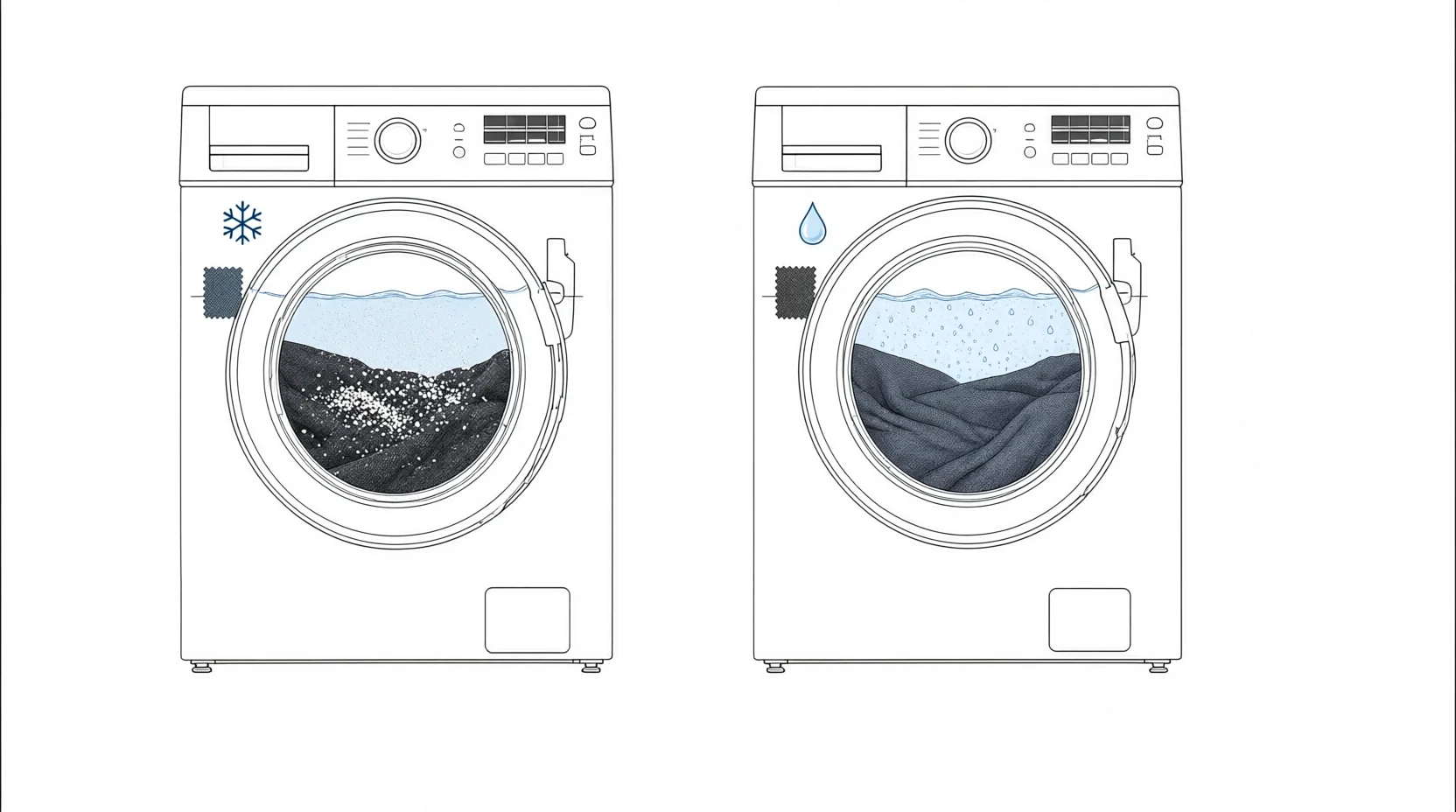
If you are troubleshooting residue from a pre-dosed format rather than powder, the same principles apply: too little water, cold temperatures, and overloading can all prevent full dissolution. For more on that specific issue, see why laundry pods may not dissolve and how to fix residue.
Key takeaways
White residue on dark clothes is usually a dissolution problem, not a cleaning failure. Warm water, correct dosing, and proper loading prevent most occurrences. If your water is consistently cold or hard, powder may not be the best format for your routine. Switching to liquid detergent or a pre-dosed alternative can reduce the risk, but check that the format suits your washer and wash conditions. Always follow the product label and your machine manual for specific guidance.