
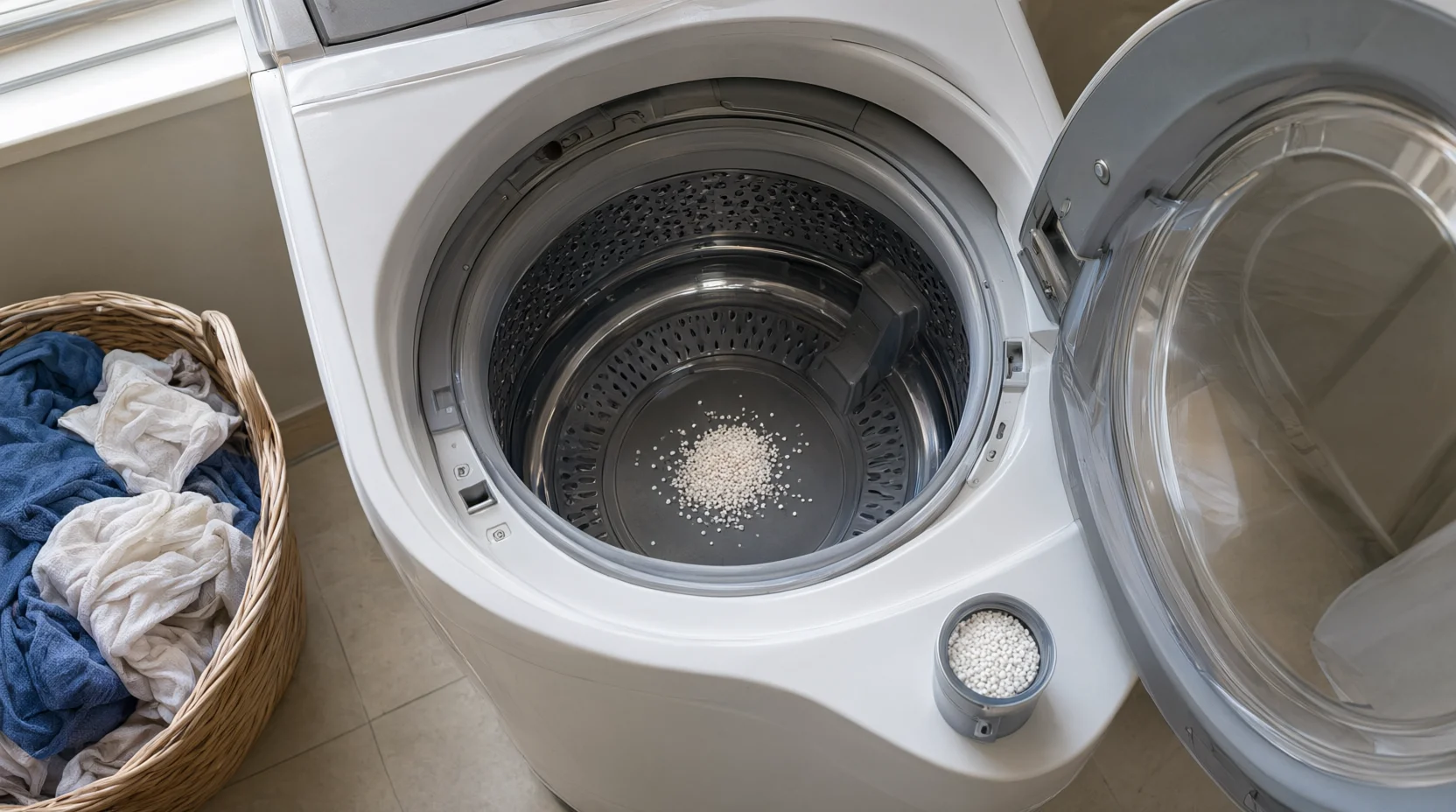
Add laundry scent beads directly to the empty washer drum before the clothes, never to the dispenser drawer. For a regular load, start with about half a capful and adjust up or down based on load size and how strong you want the scent. Scent beads can generally be used alongside laundry pods and laundry sheets when label directions are followed and all products go into the drum first. If you see residue, reduce the amount and check for overloading or very cold water.
How Much to Use Based on Load Size
Scent beads are fragrance products, not detergents, so the "right" amount is partly a matter of preference. Brand concentration, fabric type, cycle length and drying method all affect how strong the final scent is. A dose that smells subtle on towels may seem heavy on synthetic workout gear.
Use these amounts as starting points, then adjust on the next load:
- Small load: about ¼ capful
- Regular load: about ½ capful
- Large load: up to a full capful
Capful sizes are not standardized across brands, so the same fraction can represent different weights. Check the product label for the manufacturer's own dosing guidance, and treat any ounce or gram figure as specific to that brand rather than a general conversion. If you already use a scented detergent or a pod that contains fragrance, begin with less and increase only if the result is too faint. Fragrance can also build up in fabrics over repeated washes, so a dose that seems light at first may become more noticeable after several cycles.
Where to Place Scent Beads in the Washer
Placement matters more than most people expect. Scent beads need direct contact with water from the start of the cycle so they can dissolve and release fragrance through the load. The dispenser drawer is designed for liquids and powders and does not provide that early, direct water contact.
A practical loading order is:
- Add the scent beads to the empty drum.
- Add your detergent—a laundry pod or a laundry sheet.
- Load the clothes on top.
This order keeps both the beads and the detergent in the drum, where the water enters first. It also stops beads from getting trapped in folded clothes before the cycle starts. Do not put scent beads in the fabric softener compartment or any other dispenser slot, and do not use them in the dryer.
Front-Load vs. Top-Load Washer Considerations
The drum-placement rule applies to both front-load and top-load machines. The difference lies in how much water is available to dissolve the beads and carry the fragrance through the load.
High-efficiency front-loaders use less water than traditional top-loaders, so overloading and over-dosing can hinder dissolution. If you use a front-loader, keep the drum loosely filled so clothes can tumble freely, and stay near the lower end of the dosing range until you see how the beads perform in your machine.
Top-loaders generally provide more water, but overloading still prevents proper circulation. In any washer type, beads need room to move, dissolve and distribute. A packed drum can prevent beads from dissolving fully, which may leave specks on fabrics or reduce how evenly the fragrance spreads.
Using Scent Beads with Laundry Pods and Laundry Sheets
Scent beads and laundry pods serve different purposes: the pod delivers detergent for cleaning, while the beads add fragrance. Because they are not substitutes for each other, they can generally be used in the same load when label directions are followed. The same applies to laundry sheets, which are a detergent form rather than a fragrance product.
Both the pod or sheet and the beads belong in the drum before the clothes. Do not place pods or scent beads in the dispenser drawer; follow the specific product label for laundry sheets. A practical order is beads first, then the pod or sheet, then the clothes on top. This keeps all products in contact with water from the start of the cycle.
If your laundry pods or detergent already have a strong fragrance, adding laundry scent beads may be unnecessary or may make the scent stronger than you expect. When combining scented products, start with a reduced amount of beads. For more on pairing and loading, see how to use laundry scent beads with laundry pods.
Reducing the Risk of Residue on Clothes
Residue is often linked to usage factors such as too much product, an overloaded drum, very cold water or incorrect placement, all of which can keep the beads from dissolving fully. When that happens, small waxy or powdery specks may cling to fabrics, especially dark or synthetic items. Product-specific causes are also possible, so check the label if the problem persists.
To reduce the risk:
- Measure the beads instead of pouring freely from the container.
- Keep the load loose enough for clothes to tumble and for water to circulate.
- Follow the product label and your washer manual for water temperature guidance.
- Add beads to the empty drum, not the dispenser.
- After washing, check folded garments and pockets if you notice specks.
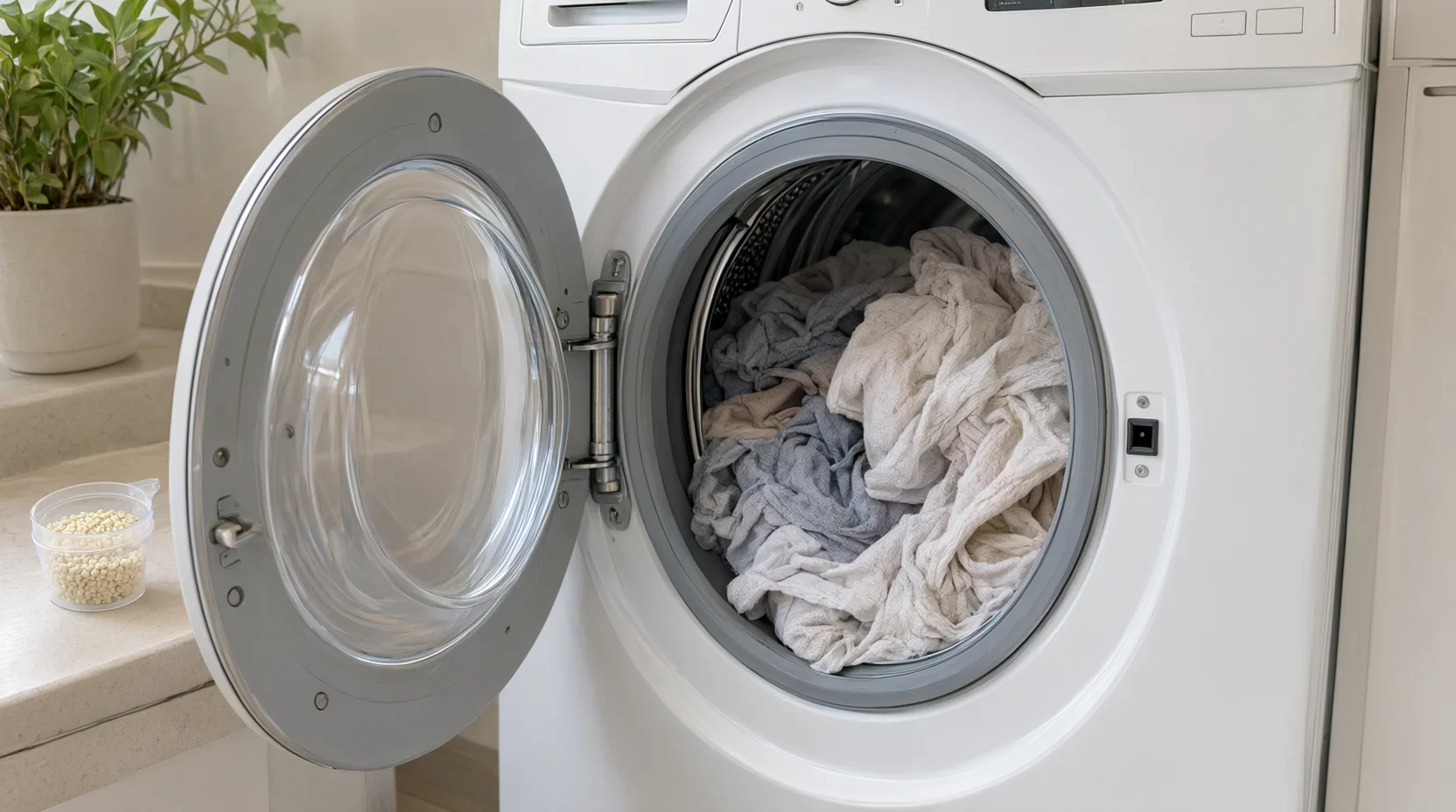
If residue appears, use fewer beads on the next load and make sure the drum is not overloaded. If the problem continues, see why laundry scent beads leave residue and how to fix it for a more detailed troubleshooting sequence.
When to Adjust or Skip Scent Beads
Scent beads add fragrance only. They do not clean clothes, soften fabrics or replace detergent, so they should not be used as a substitute for laundry pods, laundry sheets or liquid detergent. If softening is your goal, a fabric softener serves a different function.
Consider reducing the amount or skipping beads entirely when:
- You or a household member has sensitive skin or fragrance sensitivity.
- Your detergent or pod already provides a strong scent.
- You are washing towels or bedding that will be used by someone who prefers unscented laundry.
For delicate fabrics, technical sportswear, or items labeled for gentle care, follow the garment care label and test with a small load before using scent beads across a full wash. When you switch brands, washers, or fragrance preferences, start with a small amount as a test. Scent intensity is personal, and the same dose can behave differently depending on the fabrics, the cycle, and how the laundry is dried. Starting low and adjusting upward gives you more control than trying to fix an overpowering load afterward.