
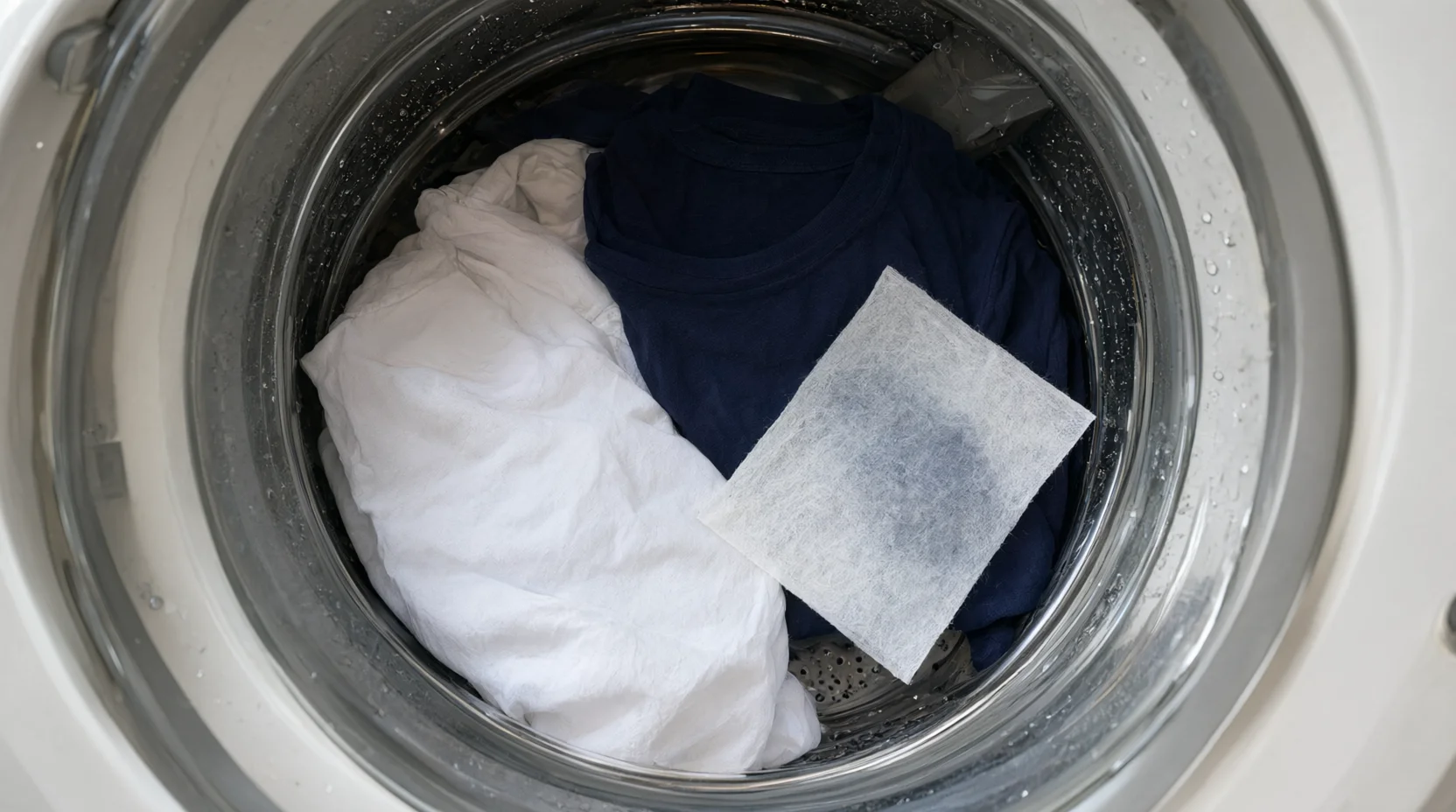
Colour catcher sheets and washing new dark clothes separately prevent different problems, so they work best together rather than as substitutes. Sheets trap loose dye that has already entered the wash water, but their absorption is finite. Washing new darks on their own stops concentrated dye from reaching other garments in the first place. Neither method stops the dark garment itself from fading, and a sheet cannot reverse dye that has already transferred onto a light item.
What Each Method Actually Prevents
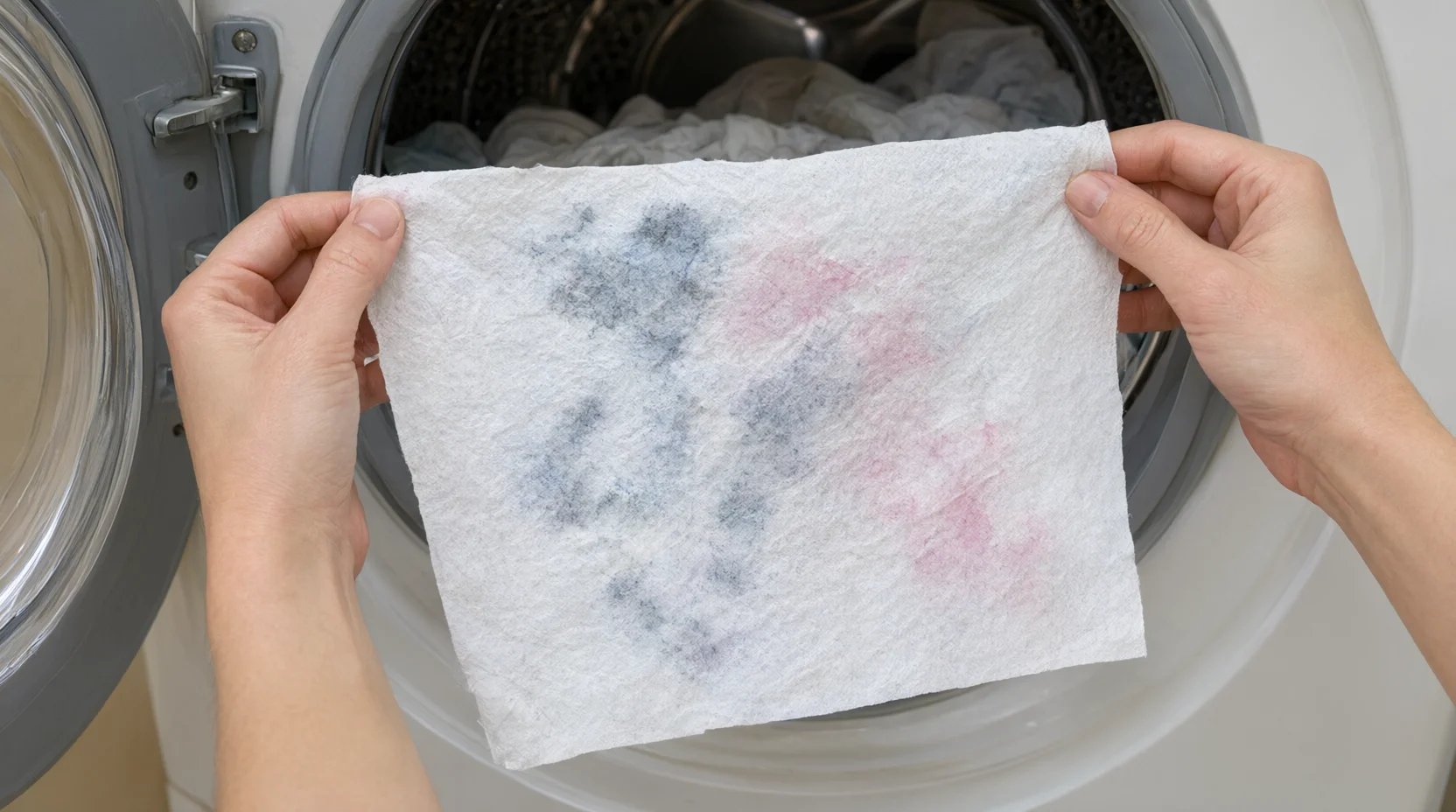
A colour catcher sheet is a sacrificial layer. It contains absorbent fibres or polymers, commonly including PVP (polyvinylpyrrolidone), that attract and bind free dye molecules suspended in the wash water. Once bound, that dye is less available to redeposit on other fabrics in the drum. The sheet usually comes out tinted, which is the visible sign that it captured pigment.
Washing dark clothes separately works by a different route: it removes the opportunity for contact. If no light garments share the drum, dye-laden water has nothing pale to stain. Separation does not capture or neutralise dye; it simply keeps the dye away from items that would show it.
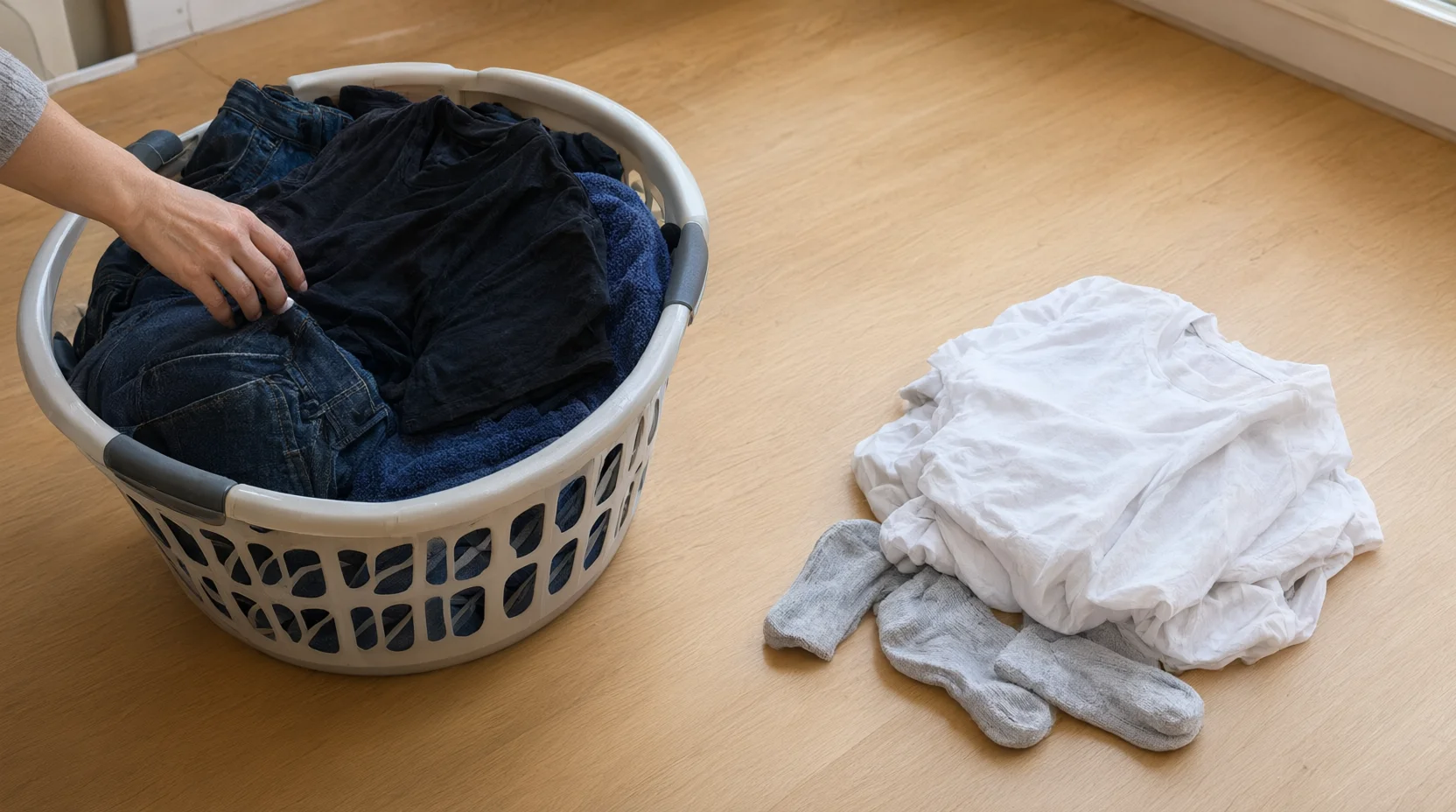
That distinction matters when you decide what to rely on. Sheets address dye that has already been released. Separation prevents release from becoming anyone else's problem. One is a capture mechanism, the other is a containment strategy.
How Colour Catcher Sheets Work and Where They Reach Their Limit
In the drum, water-soluble dye leaves the fabric and circulates freely in the water. The polymer in the sheet chemically binds some of those dye molecules before they can settle onto another garment. That is why sheets are genuinely useful for minor bleeding from stable, previously washed colours in a mixed load.
The limit is capacity. A sheet can bind only so much dye, and some wash conditions release far more than it can hold. The first washes of raw denim, bright reds and very dark new garments are the classic overload cases. High-temperature washes make it worse: hot water increases dye release, so the amount of pigment in the water can exceed what the sheet absorbs. A sheet is also single-use, so the cost per wash adds up over a household's laundry cycle.
Two further limits are worth stating plainly. A sheet cannot restore a garment that has already picked up transferred dye, so it works only as prevention. Nor does it replace detergent or other fabric-care products; it is an extra layer, not a substitute for cleaning chemistry.
Why Washing New Dark Clothes Separately Remains the Safer Default
New garments, especially dark cottons and denims, tend to release the most excess dye in their first few washes. During that window, separation is the only reliable barrier, because it removes the risk rather than trying to absorb it. Cold water reduces dye release and slows transfer, but it does not eliminate the risk when a heavily bleeding item shares a load with lights.
Separating those first washes keeps released dye away from the rest of the wardrobe, which is the protection separation can actually deliver. There is also no ongoing product cost once the initial washes are done, which makes it the economical choice for the highest-risk period.
At-a-Glance: Colour Catcher Sheets vs Washing Separately
The table below compares the two approaches on the factors that usually decide the choice. Results still depend on the specific product formulation, the dye type in the garment and the wash conditions, so treat the comparison as a guide rather than a guarantee.
| Dimension | Colour catcher sheets | Washing new darks separately | Using both together |
|---|---|---|---|
| Mechanism | Binds loose dye already in the water | Keeps dye from reaching other garments | Containment plus capture |
| Best use case | Mixed loads of stable colours that have already been washed | First washes of new dark or bright garments | Moving a new dark item into routine mixed loads |
| Effectiveness limits | Can be overwhelmed by heavy dye release or hot water | Requires enough laundry to justify a separate load | Still limited by sheet capacity in extreme cases |
| Ongoing cost | Single-use; cost per wash adds up | No product cost after the initial washes | Sheet cost applies only to mixed loads |
| Effort | Low: add a sheet to the drum | Higher: sort and run an extra load | Moderate: sort first, then use sheets for routine loads |
Practical Scenarios: Which Approach Fits Your Situation
The right choice depends on what is in the drum and how new it is. These scenarios cover the situations home launderers most often face.
- First wash of brand-new dark jeans or towels: wash them separately. Don't rely on sheets alone for this load, because the dye release is likely to exceed what a sheet can hold.
- Routine mixed load of stable colours that have already been washed: a sheet adds a margin of protection, especially if you prefer not to sort every load.
- A new red shirt accidentally mixed with lights: a sheet may reduce transfer, but it won't reliably prevent damage. Check the load before drying, since heat can set any dye that has transferred.
- Limited machine access, so loads must be combined: cold water plus a sheet offers partial protection, not a guarantee. If you can, keep genuinely new dark items out of the load.
- Travelling or using shared laundry facilities: sheets are portable and convenient, so carry spares, but still wash a newly bought dark item separately where the machine allows.
For readers who also want to understand how detergent choice and water conditions affect dark garments, our guide to powder detergent residue on dark clothes covers a related problem. If you are weighing whether to sort at all, the comparison between laundry pods and liquid detergent explains how product form fits into a wash routine, though it does not change the dye-transfer principles above.
What Neither Method Can Do
Both approaches protect the other garments in the load; neither prevents the dark garment itself from fading over time. Gradual colour loss comes from repeated washing, UV exposure and friction, and a colour catcher sheet does not address any of those causes. Separation does not stop fading either, because the garment still goes through the wash cycle.
Sheets also do not replace detergent, and neither method corrects poor fabric quality or improperly set industrial dyes. If a garment bleeds heavily wash after wash, no sheet will make it safe to mix with lights.
The most reliable long-term practice is to combine the two: wash new dark items separately for their first few cycles, then use colour catcher sheets as a margin of protection when those items join mixed loads of stable colours. That sequence matches each method to the problem it actually solves, rather than expecting one product to do both jobs.