
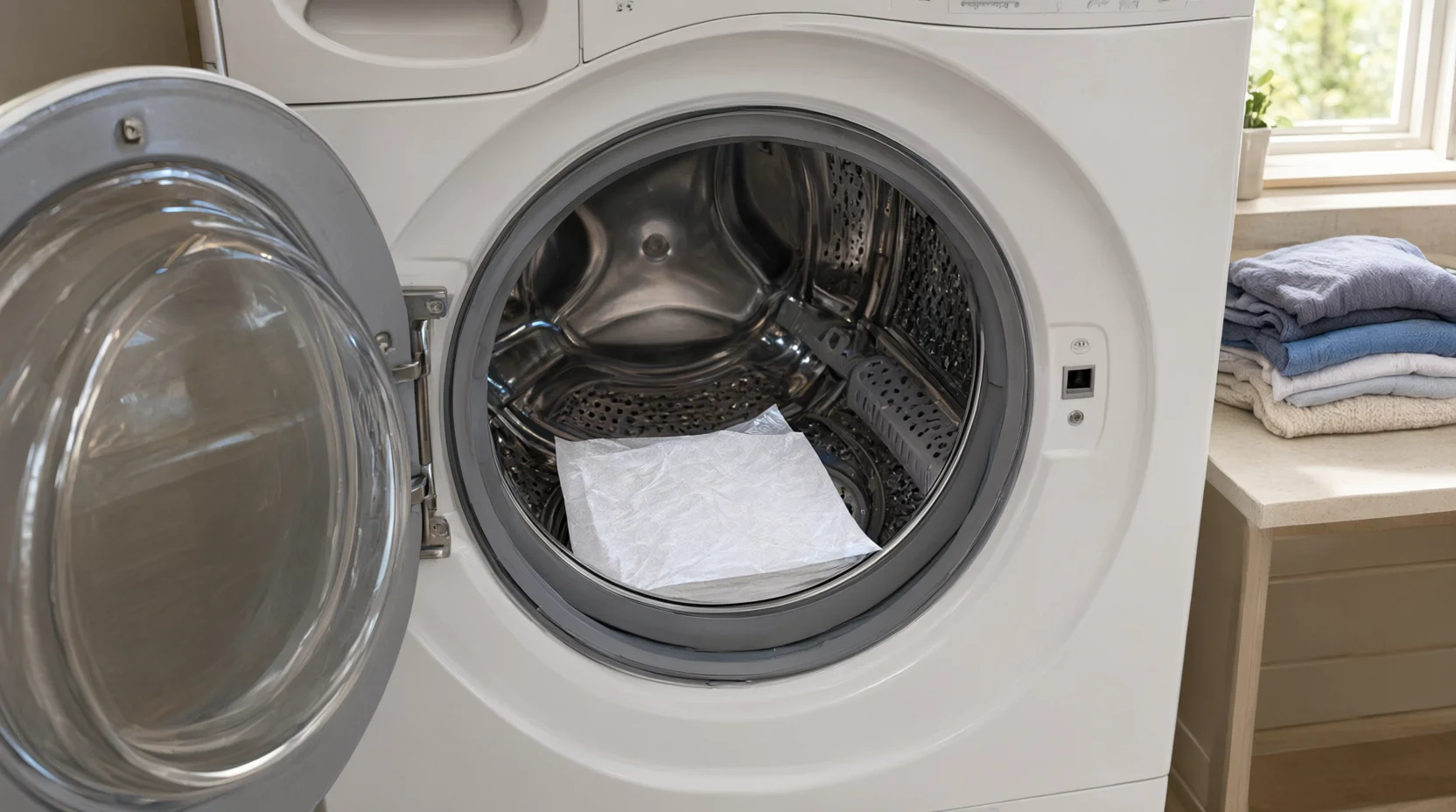
Laundry detergent sheets are easiest to use when you place the sheet directly in the empty washing drum before adding clothes, then dose according to the product label—often half a sheet for small loads, one sheet for a medium load, and two for a large or heavily soiled load. Most sheets dissolve adequately in standard wash cycles at cold, warm, or hot temperatures, but very cold water below about 60°F (15°C) can slow dissolution and reduce cleaning on greasy stains. Independent testing has found that laundry sheets as a group scored lower than the lowest-performing liquids or pods tested, so they suit everyday laundry better than heavy grease removal.
Where to Place Laundry Detergent Sheets in the Washing Machine
Put the sheet directly into the empty drum, not into the detergent drawer. A sheet placed in a drawer may not receive enough water flow or tumbling action to break down fully, and drawer designs vary between machines. Placing it in the drum also works for both top-load and front-load washers, so you do not need to check drawer compatibility.
Add clothes on top of the sheet rather than laying the sheet on top of the load. This lets the sheet move with the laundry as the drum turns, distributing detergent through the wash water instead of sticking to the drum wall or the door seal. If you use a mesh laundry bag for delicates, keep the sheet outside the bag so it can dissolve freely.
How Many Laundry Sheets to Use Per Load
General industry guidance suggests half a sheet for a small load, one full sheet for a medium or regular load, and two sheets for a large or heavily soiled load. Load size is usually judged by how full the drum is—roughly half, three-quarters, or completely full—rather than by weight, because most people estimate visually. A large load is often described as filling about 75% of the drum.
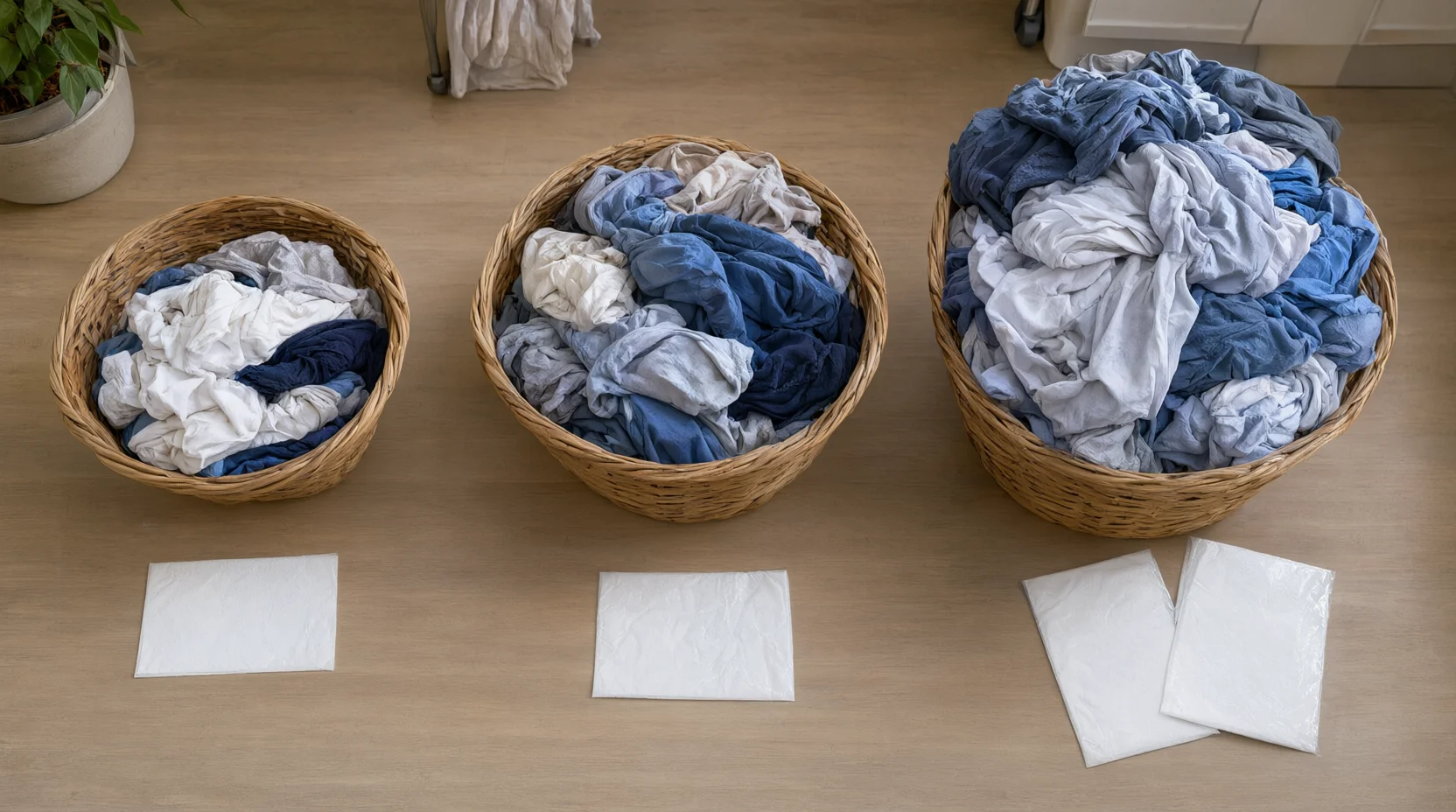
These are starting points, not universal rules. Sheet concentration, water hardness, and soil level vary by brand, and the product label takes precedence over any general recommendation. Using extra sheets does not guarantee better cleaning and may leave residue in very short or gentle cycles where there is not enough water and agitation to dissolve the added material. If you are switching from liquid detergent or pods, run a few test loads and adjust based on how the clothes look and feel after drying.
Do Laundry Sheets Dissolve in Cold Water?
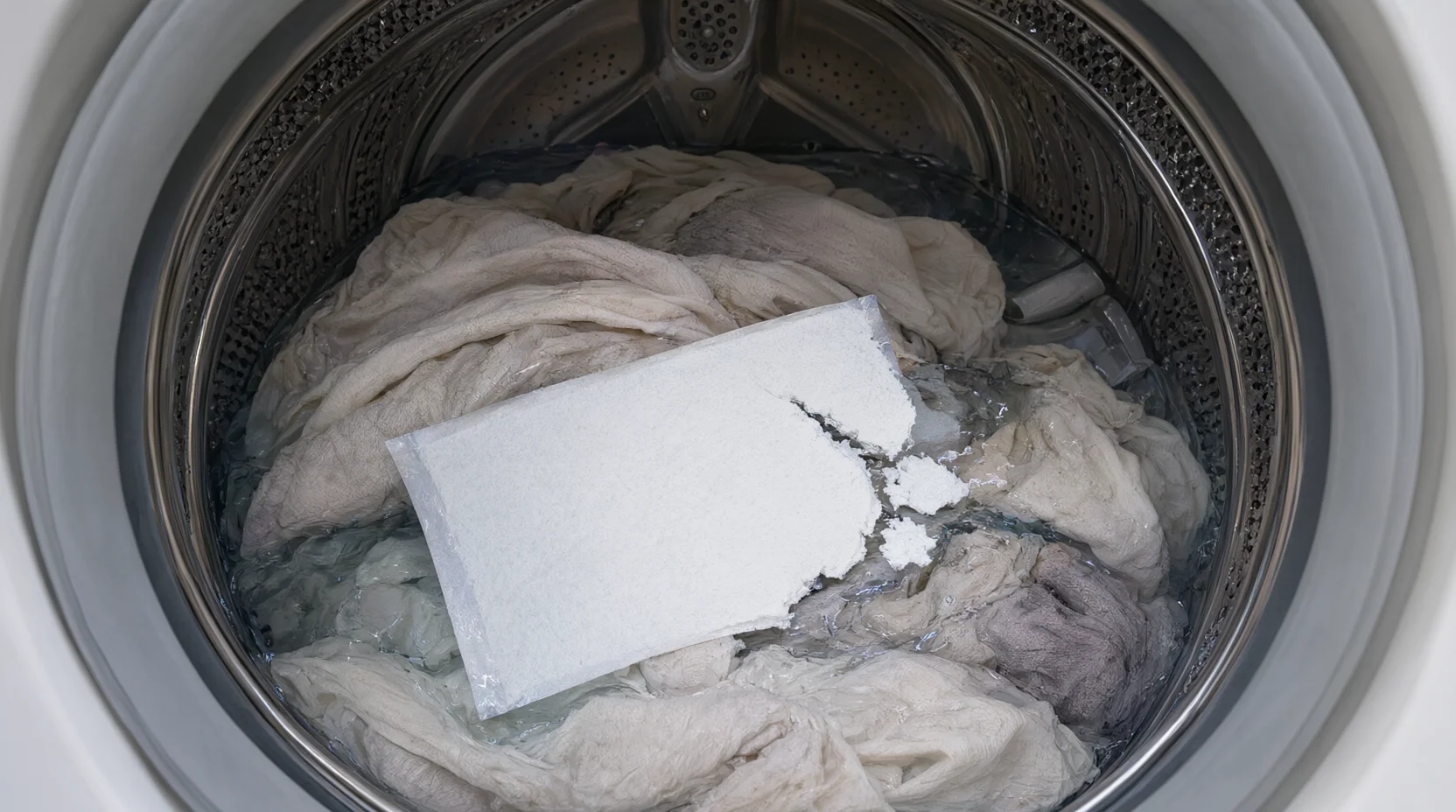
Most laundry detergent sheets dissolve adequately in standard cold-water cycles of normal duration, roughly 45 to 60 minutes. The sheet breaks apart as it contacts water and releases its cleaning ingredients, and by the end of a typical cycle it should be fully dissolved. However, water temperature matters: temperatures below about 60°F (15°C) can slow the dissolving process, so the detergent may release more gradually and clean less effectively on greasy or heavily soiled items.
Some brands offer fast-dissolving sheets that use specialized formulas or solubilizing agents to break down more efficiently in cold water. That is a formulation-specific feature, not a property of all sheets. Check the product label or brand claims if cold-water washing is important to you. The risk of partial residue increases with extremely cold water, short gentle cycles, and overloaded drums that restrict water flow. Pre-tearing or crumpling the sheet can help in marginal conditions, but it is not a substitute for adequate water temperature and cycle length.
Laundry Sheets vs Liquid Detergent: What to Expect on Cleaning Performance
Independent testing by Consumer Reports found that laundry sheets as a group had lower performance than the lowest-performing liquid or pod/pack detergents tested. In that evaluation, the top-rated sheet brand, Earth Breeze Liquidless Eco Sheets, earned an Overall Score of 29, while Tide Plus Ultra Stain Release (liquid) scored 84 and Tide Plus Hygienic Clean Heavy Duty 10X Power (pod/pack) scored 78. Those figures apply only to the tested brands and do not predict how every sheet on the market will perform.
In practice, laundry sheets can handle everyday soils such as light body oil, dust, and normal wear. Heavy grease, cooking oil, and set-in stains are weaker points for many sheet formulations, partly because cold-water grease removal is harder for any detergent type. If a sheet is also dissolving slowly in very cold water, its cleaning ingredients may not be fully available when the wash cycle ends. Sheets offer convenience, light weight, and easy storage, but if maximum stain removal is your priority, a well-rated liquid or pod may be a better fit.
Troubleshooting Common Issues
If you find undissolved residue on clothes or in the drum, check the water temperature, cycle length, and load size. Very cold water, a short gentle cycle, or an overloaded drum can all prevent the sheet from breaking down completely. Also confirm that the sheet was placed in the drum rather than trapped in the door seal or a detergent drawer. If sheets stick to a garment, make sure the sheet goes into the drum before the clothes and has room to tumble freely.
If cleaning is insufficient, check that your dose matches the load size and soil level. Pre-treating stains or choosing a warmer water setting for greasy items can help. Keep in mind that adding more sheets is not a reliable fix if the underlying issue is poor dissolution or a cycle that is too short.
Key Takeaways for Best Results
- Place the sheet in the drum first, then add clothes on top.
- Follow the product label for dosing; use load size and soil level as your guide.
- Allow enough cycle time for the sheet to dissolve, especially in cold water.
- Reserve cold-water washing for everyday loads; use warmer water for heavy grease.
- When switching from liquid or pods, test a few loads to calibrate dosing for your machine and water conditions.
For related guidance, see our articles on laundry pods vs liquid detergent and laundry pods not dissolving.