
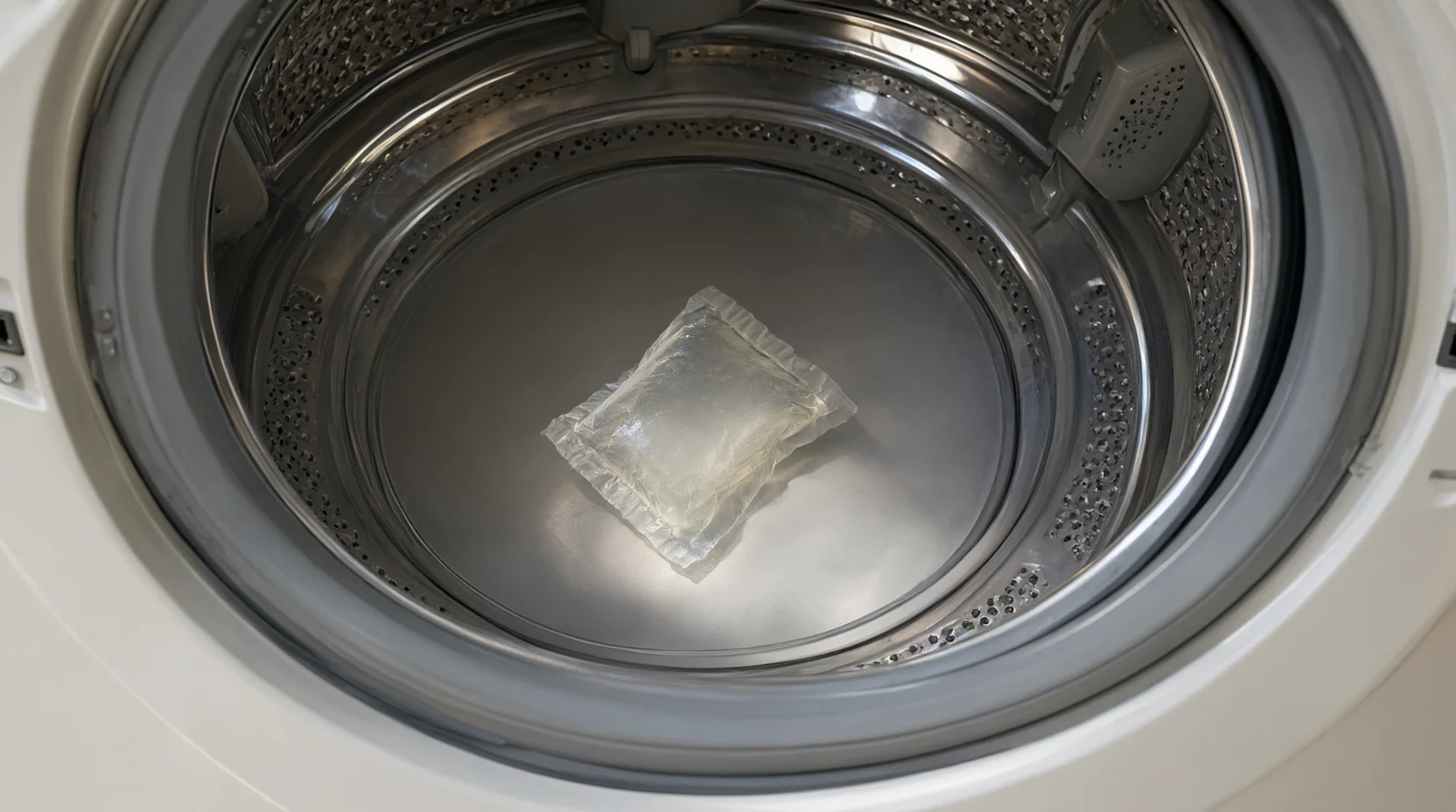
Rester fra vaskekapsler peger næsten altid på det samme problem: Den vandopløselige PVA-film blev ikke nedbrudt helt, før kapslen blev fanget i stoffet. De fire mest almindelige årsager, du kan forebygge, er meget koldt vand, en overfyldt tromle, forkert placering og et kort program eller et program med lidt vand. Retter du op på dem, forsvinder de fleste rester. Hvis det bliver ved gennem flere vask, passer din maskines ydeevne ved koldt vand sandsynligvis ikke til kapselformatet, og flydende vaskemiddel er det mere pålidelige valg, når du konsekvent vasker koldt.
Hvad resterne egentlig er
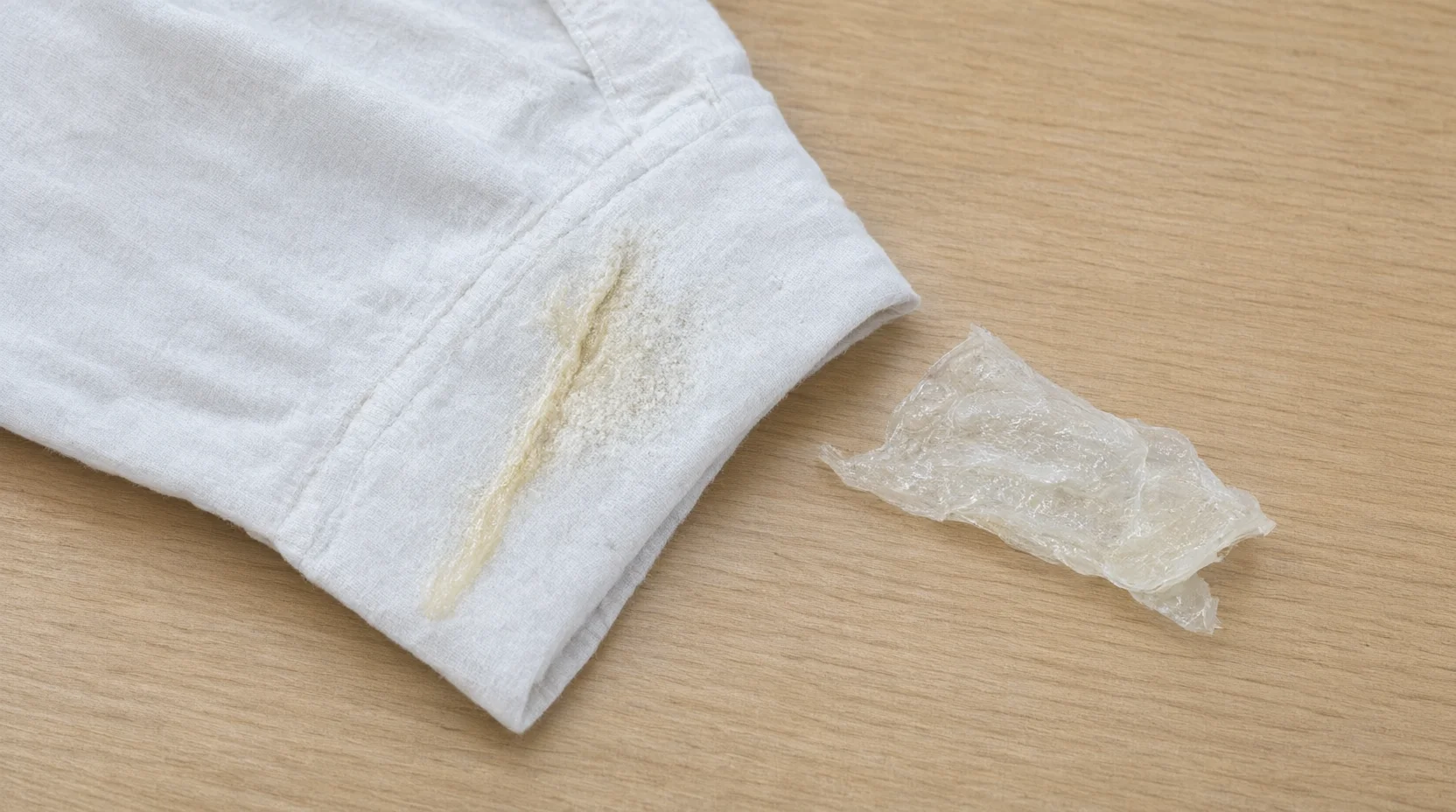
Det, du ser, er som regel en af to ting. Den første er fragmenter af uopløst PVA-film – den klare, hvidlige og let gummiagtige indpakning, der holder vaskemidlet. Den anden er koncentreret vaskemiddel, der slap ud af kapslen, før filmen sprang helt; det ligner ofte en slimet stribe eller et område med tørret skum.
PVA-film er designet til at opløses i vand, men opløsning er en proces med en bestemt hastighed, ikke en øjeblikkelig omstilling. Den afhænger af vandtemperaturen, hvor meget vand der er til stede, hvor meget bevægelse kapslen udsættes for, og hvor længe programmet varer. Sænker du bare én af disse faktorer tilstrækkeligt, kan filmen overleve, til kapslen allerede er viklet ind i tøjet.
De to typer rester har lidt forskellige årsager, og derfor kan det betale sig at finde ud af, hvilken type der er tale om. Filmrester peger på et opløsningsproblem – der har ikke været varme, vand, bevægelse eller tid nok. Vaskemiddelstriber peger snarere på et problem med dosering eller ilægning, hvor kapslen har afgivet sit indhold det forkerte sted, eller hvor vasketøjet var for lidt i forhold til det vandniveau, maskinen valgte.
De fire hovedårsager til ufuldstændig opløsning
Koldt eller meget koldt indløbsvand
Koldt vand bremser filmens nedbrydning. I nogle områder er vandet fra hanen om vinteren så koldt, at filmen stadig er intakt, når maskinen har fyldt vand ind i starten – og på det tidspunkt kan kapslen allerede være begravet i tøjet. Vaskekapsler er generelt formuleret til at virke i koldt vand, men usædvanligt kolde forhold kan stadig være en udfordring.
En overfyldt tromle
Når tromlen er pakket for tæt, kan vandet ikke cirkulere frit. Kapslen kan ende klemt inde mellem tøjet med ringe direkte kontakt til vaskevandet, så den aldrig får den påvirkning, den har brug for. En meget lille vask kan give et beslægtet problem: maskiner med mængdeføler kan tilsætte så lidt vand, at kapslen ikke har noget at opløse sig i.
Placering oven på tøjet
Hvis du lægger kapslen oven på tøjet i stedet for ned i den tomme tromle, kan den sætte sig fast i stoffet, før vandet når den. Det betyder mest i frontlæssere, som typisk fylder vand ind fra bunden – en kapsel, der ligger oven på en bunke, får måske først vand, når tromlen allerede er begyndt at dreje.
Korte programmer og indstillinger med lidt vand
Hurtigvask og ekspresprogrammer giver måske ikke filmen tid nok til at blive nedbrudt, især ikke i kombination med koldt vand. Indstillinger med lidt vand forværrer problemet, fordi der er mindre vand til at opløse filmen i. Faktorerne forstærker hinanden: en kold hurtigvask med en fuld tromle er det klassiske scenarie, hvor der efterlades rester.
Sådan undgår du rester: fyldning og placering
Disse trin tager fat på årsagerne ovenfor i den rækkefølge, der normalt betyder mest:
- Læg kapslen i først. Læg den i bunden af den tomme tromle, før du kommer tøj i. De fleste tromler fyldes fra bunden, så kapslen får tidligt kontakt med så meget vand som muligt.
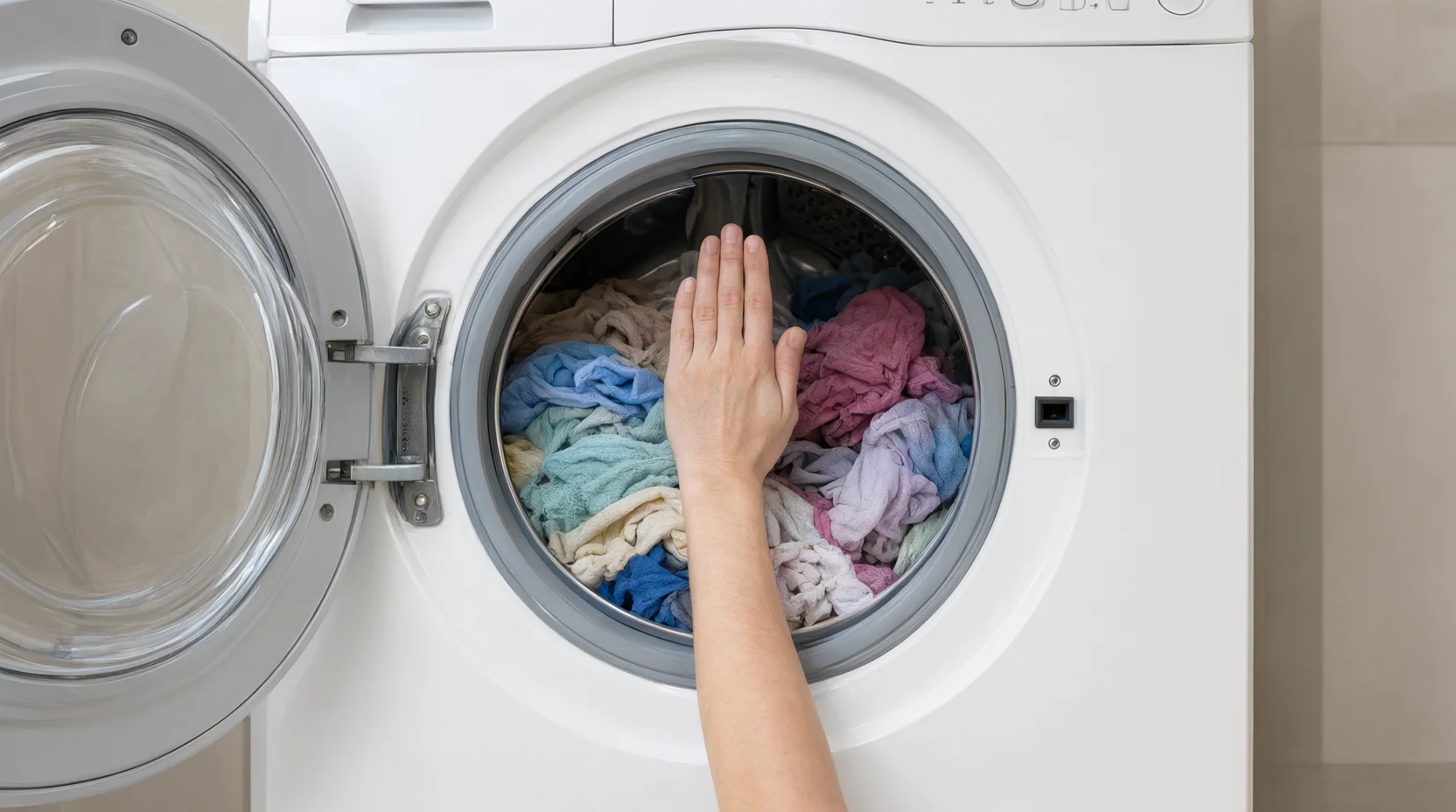
- Fyld tromlen til det rigtige niveau. I topbetjente maskiner må tromlen højst være cirka halvfuld, og vasketøjet skal være jævnt fordelt. I frontbetjente maskiner kan du bruge håndfladetesten: hold hånden lodret mellem tøjet og tromlens overkant – hvis den kan være der, er mængden nogenlunde rigtig.
- Fordel vasketøjet jævnt. Undgå at presse et stort stykke tøj ned omkring kapslen, for så kan den blive klemt mod tromlevæggen eller inde i en fold.
- Hæv vandtemperaturen, hvis stofferne kan tåle det. Et blandet varmt/koldt program kan hæve den oprindelige vandtemperatur nok til, at filmen lettere opløses, uden at tøjet udsættes for en fuld varm vask.
Hvis du vil have et nærmere indblik i, hvordan vaskekapsler er opbygget, og hvordan filmen er beregnet til at opføre sig, kan du læse hvad vaskekapsler er.
Hvornår bør du overveje et andet vaskemiddelformat
Hvis der fortsat kommer rester, selv når kapslen placeres korrekt, og vasken har den rette størrelse, skyldes problemet sandsynligvis kombinationen af maskinens koldtvandsprogram og selve kapselformatet. Det er et misforhold mellem produktet og dine vaskeforhold – ikke en dom over vaskekapsler generelt.
Flydende vaskemiddel opløses med det samme, uanset vandtemperaturen, og du kan tilpasse dosen til vaskens størrelse i stedet for at bruge en fast mængde. Det gør det mere pålideligt i husstande, hvor alt vaskes koldt. Pulver kan være effektivt ved meget snavset tøj, når temperaturen og vandmængden er tilstrækkelig, men nogle formuleringer opløses dårligt i koldt vand.
Intet af dette gør ét format universelt bedre. Vaskekapsler er fortsat praktiske og færdigdoserede, og de fungerer godt, når vandtemperaturen og programmets parametre understøtter en pålidelig opløsning. Det praktiske spørgsmål er, om dine typiske vaskeforhold gør det. Du kan få en mere udførlig gennemgang af fordele og ulemper i vaskekapsler vs. flydende vaskemiddel.
Sådan fjerner du eksisterende rester fra tøj og tromle
Hvis en vask allerede er kommet ud med rester, er oprydningen ligetil:
- Vask de berørte dele igen i varmt vand uden ekstra vaskemiddel. Det varme vand opløser og skyller film eller vaskemiddelaflejringer væk.
- Læg først den tørrede film i blød. Hvis resterne er størknet, genopbløder varmt vand dem inden genvasken.
- Tør tromlen og dørpakningen af. En fugtig klud fjerner fastsiddende fragmenter, som ellers kan aflejres igen på næste vask.
- Kontrollér pumpefilteret, hvis din maskine har et. Større stykker film kan ophobe sig der over tid.
Når maskinen og tøjet er rene, kan du vende tilbage til trinnene om ilægning og placering ovenfor. I de fleste tilfælde holder resterne op med at komme igen. Hvis ikke, er det et tegn på, at du bør skifte format til vask ved lav temperatur i stedet for at gentage samme program og håbe på et andet resultat.